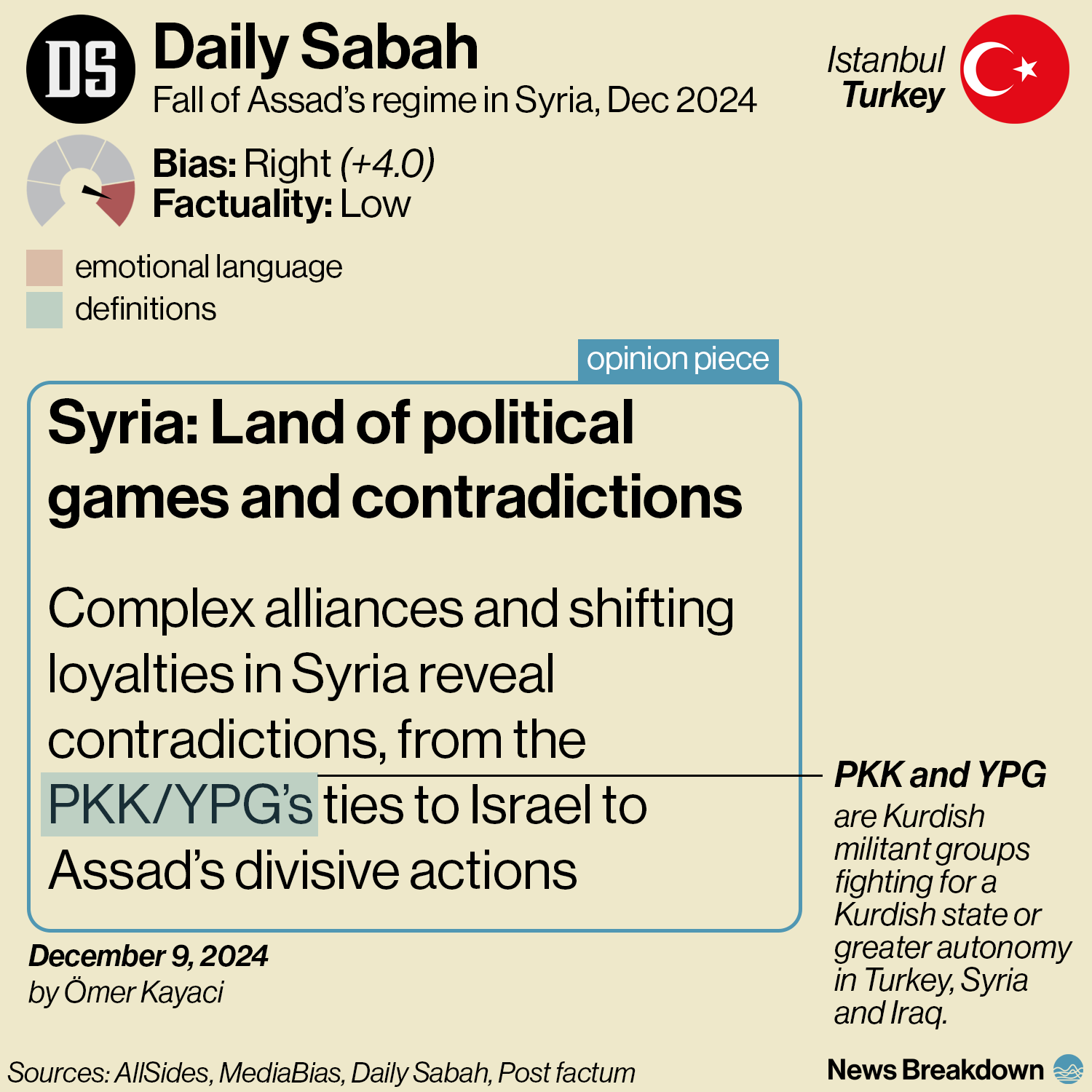
Sabah argues that the fall of the Assad regime served the interests of Israel by “diverting global attention from the genocide in Gaza” and damaging “those in the region who have been challenging Israel" (Iran).
This article focuses on the Kurdish groups and their supposed ties with Israel.
The Kurdish people have been fighting for a separate state or greater autonomy within Turkey and in neighbouring countries for over a century.
- Some of these groups were part of the Syrian Democratic Forces, which fought against the Assad regime.
The text described the Kurdish groups as Israel’s “main military and political apparatus in Syria” and asked why they were "not subjected to the same level of scrutiny” as the Assad regime had been. However:
Israel has only given limited support to the Kurdish groups. Instead, it conducted airstrikes on some military infrastructure in Syria, including chemical weapons facilities left from Assad’s regime, as well as occupying the buffer zone between Israel and Syria “indefinitely”.
Kurdish groups have not been accused of committing organised war crimes, and none of their actions compare to the atrocities of the Assad regime which included torture of thousands of Syrians.
The article does not directly criticise Assad’s regime, downplaying its wrongdoings as typical for the “monarchies of the region”.
Daily Sabah uses the spelling “Türkiye” instead of “Turkey”. In 2022, the Turkish government “rebranded” the country’s name and requested international diplomats to adopt this change.
- [We would like to hear your opinion: should Post factum spell it “Turkey”, “Türkiye” or “Turkiye”? – send us a reply]
In general, this Sabah article reflects how Turkey’s already tense relations with Israel have declined since the war in Gaza began in 2023.