Private firms, governmental labs and universities research new materials and manufacturing processes.
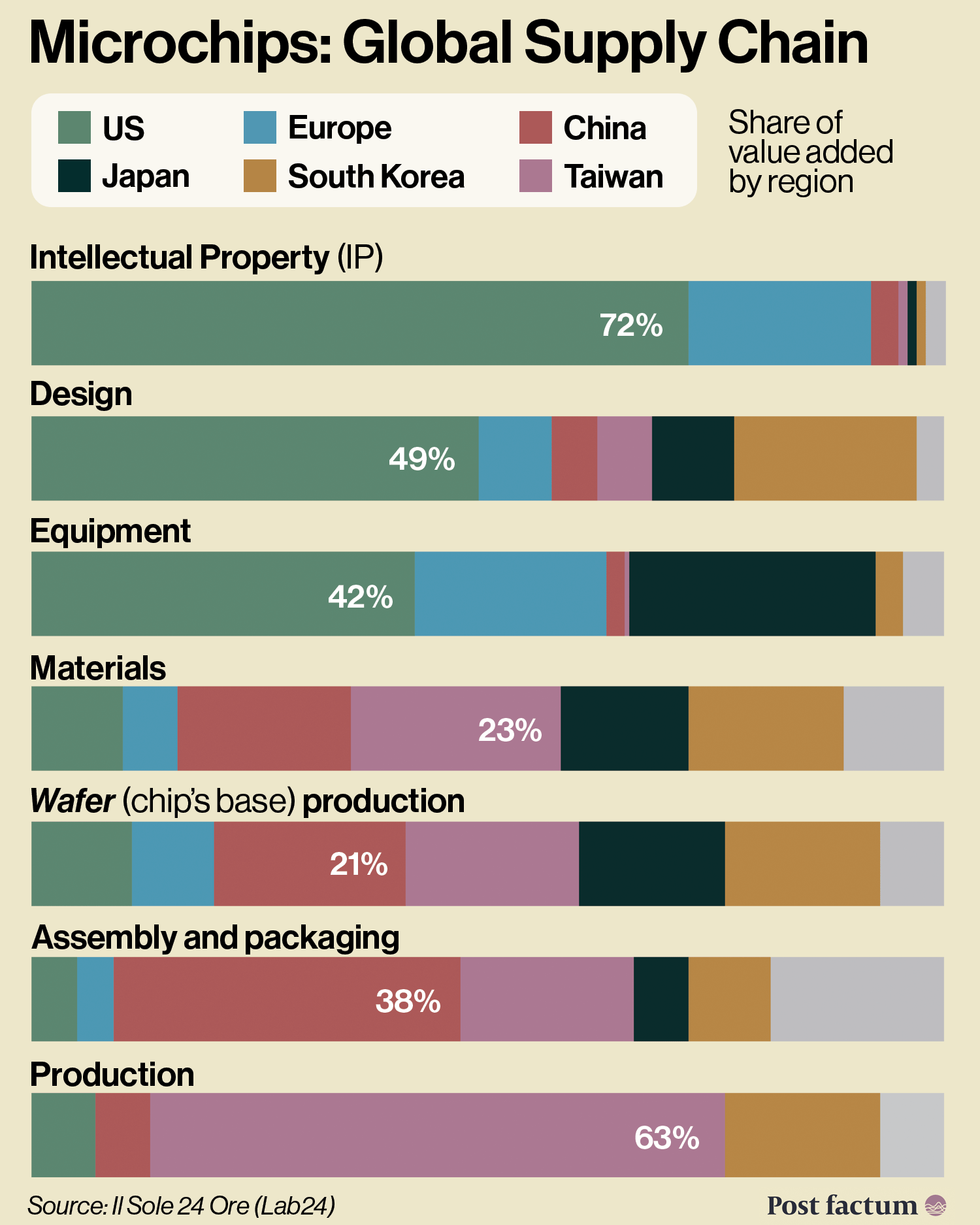
The US contributes 72% of the value added to the chips industry at the intellectual property (IP) stage.
US-based Intel and NVIDIA are the leading private firms in research and development (R&D).
The US also has the biggest share in design (49%) and equipment (42%).
Europe and Japan are major players in the equipment market, producing advanced chipmaking tools.
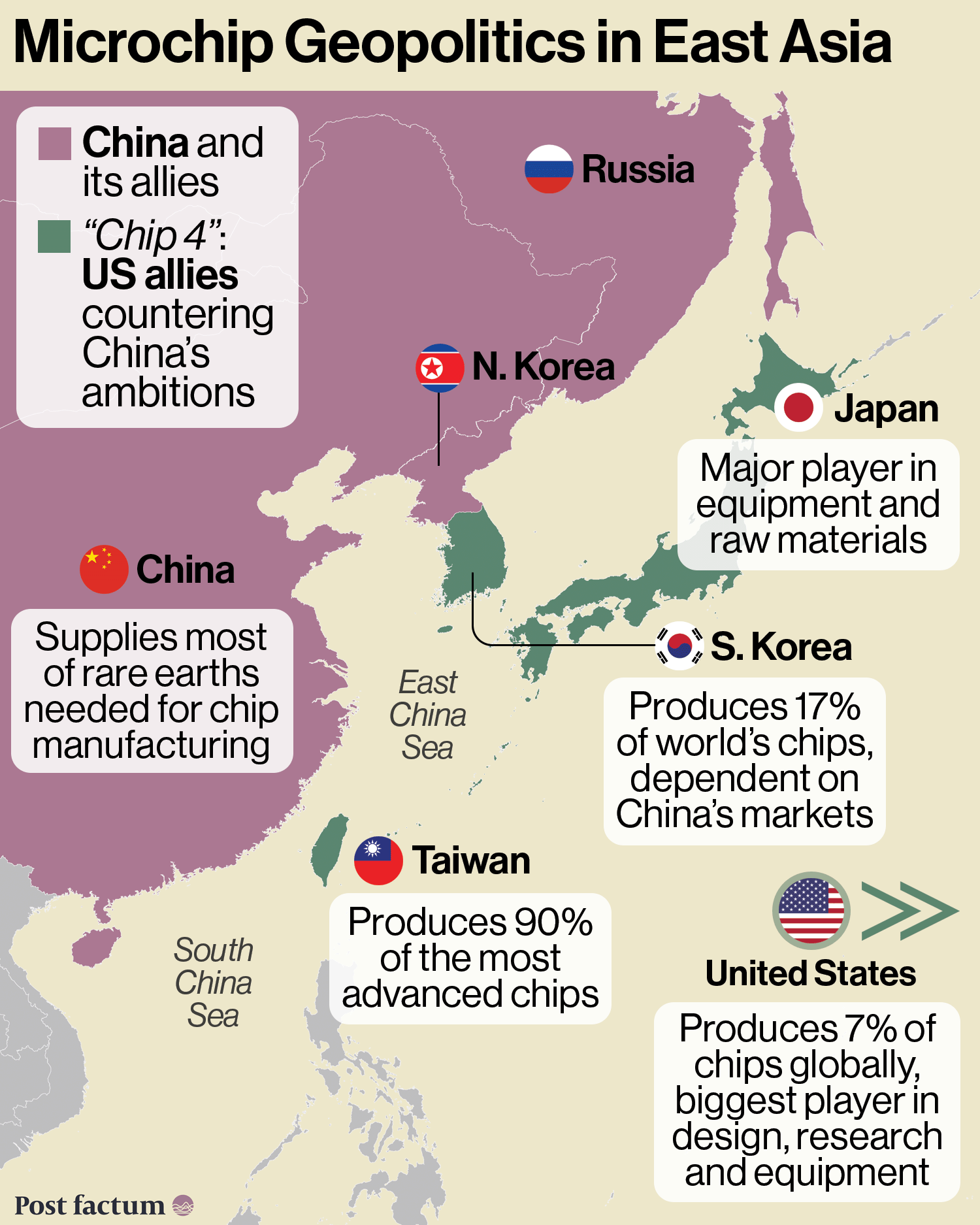
Taiwan dominates chips production, especially in advanced (60%) and most advanced (90%) chips.
China is the largest producer of basic microchips, while US is the largest producer of mid-range chips.
Specific chips are designed to optimise power, cost and performance based on specific use.
- For example, Germany is not a major international chipmaker but produces specialised chips, such as for cars.
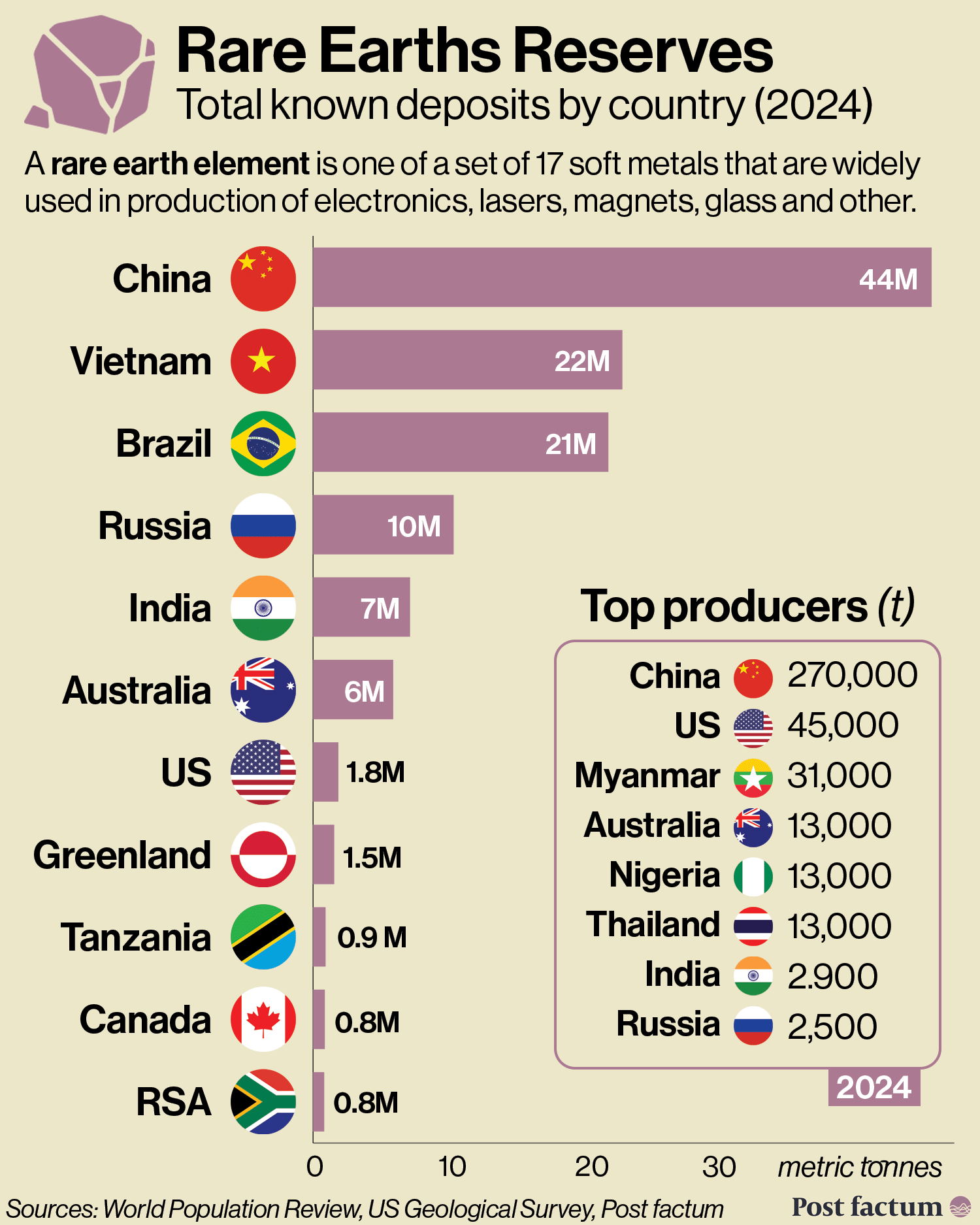
China controls most of the supply of rare earths needed to produce microchips.
Export controls: In 2018, the US started restricting the sale of chip tools, design software and intellectual property to China.
Result: China's production of advanced chips slowed.
Meaning: chokepoints at the design stage can be as powerful as those in manufacturing.
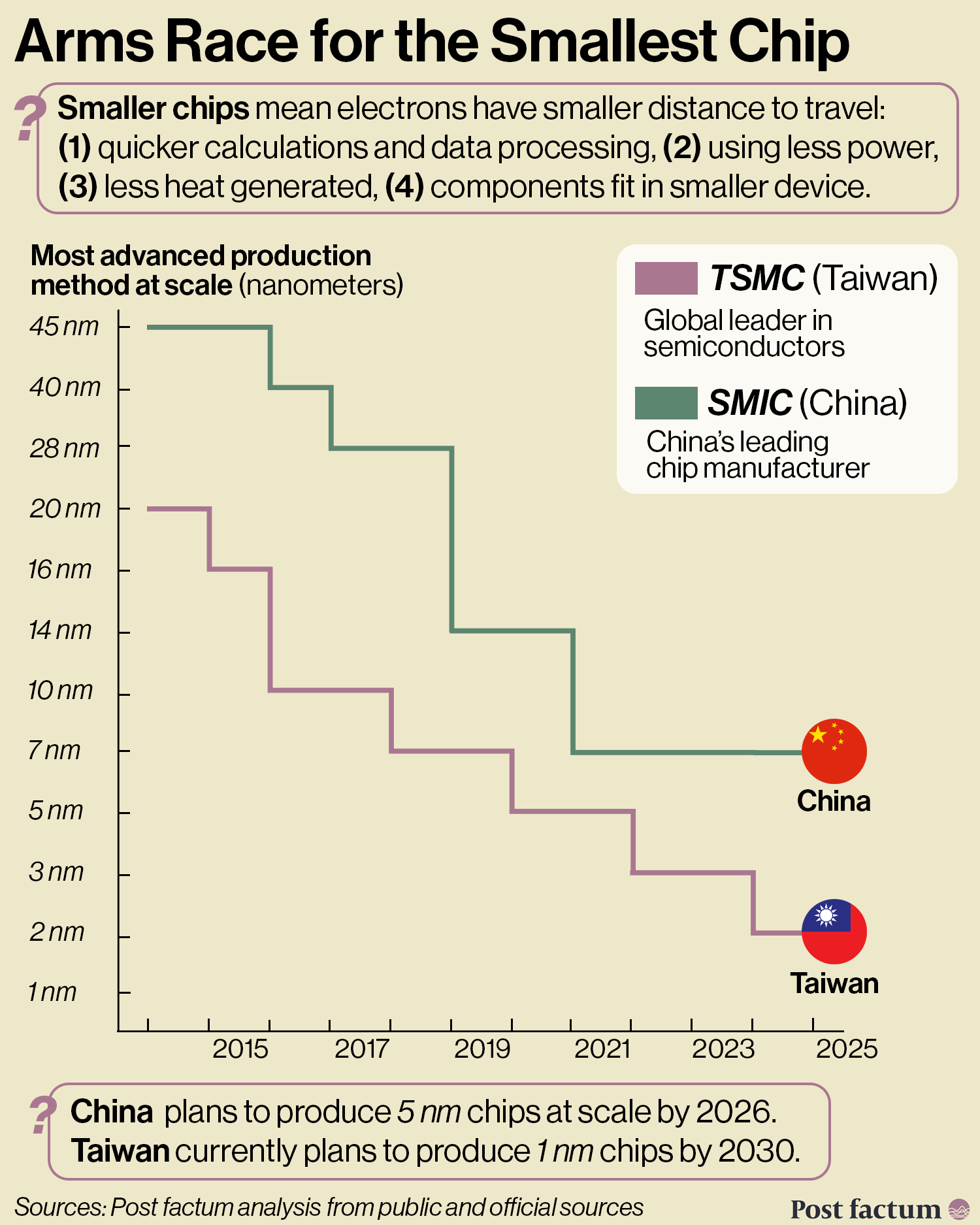
TSMC (Taiwan) and Samsung (S. Korea) produce nearly all most advanced microchips.
They use lithography machines (they print electronic circuits onto silicon chips) which are produced exclusively by the firm ASML (Netherlands).
In 2025, the Netherlands, pressured by the US, restricted ASML from selling its newest machines to China.