Why rare earths matter
What makes rare earth elements important is their unique properties.
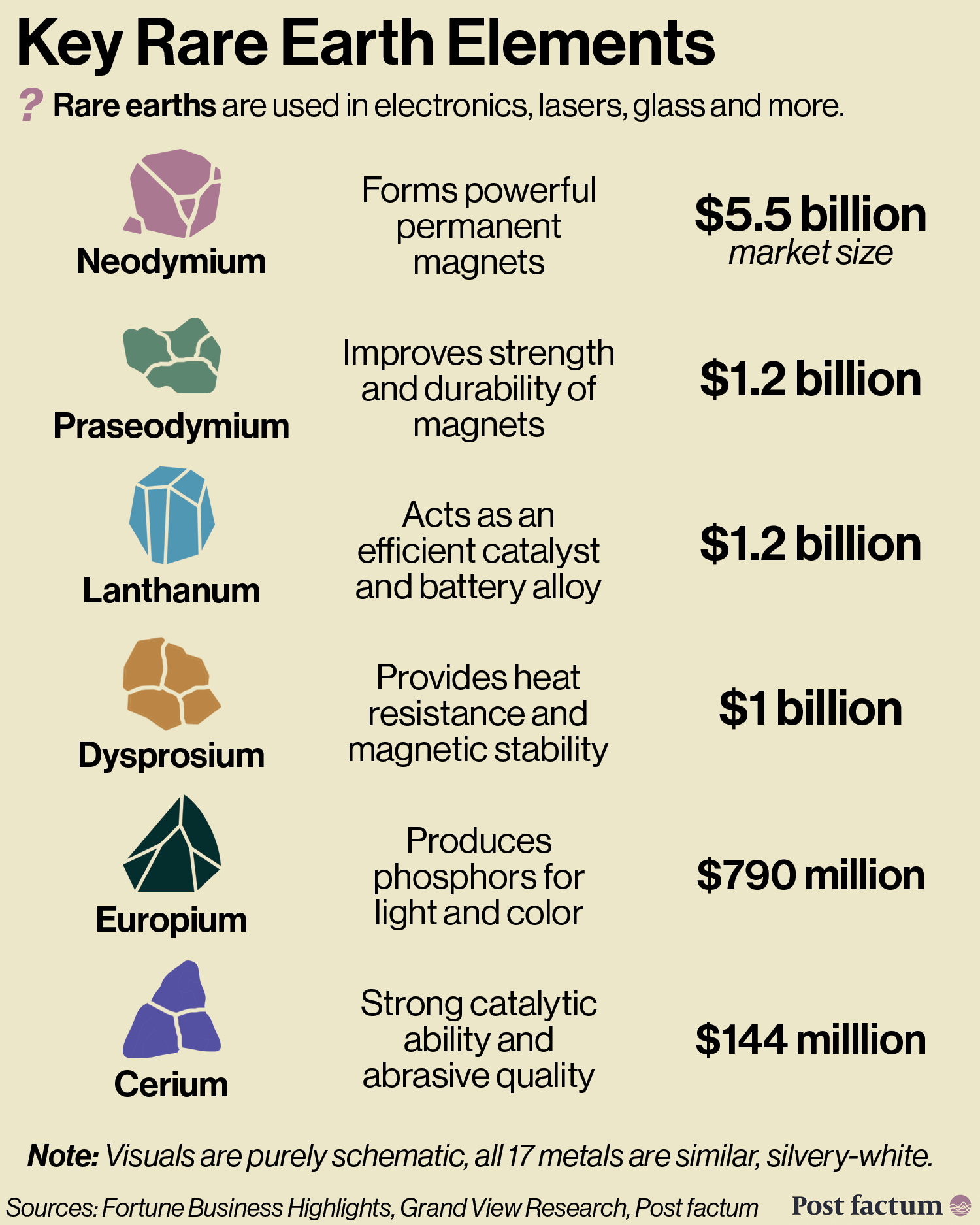
They are required for the production of high-performance permanent magnets:
These magnets are critical to electric vehicle motors, wind turbines and high-tech militaryequipment such as radars and precision-guided missiles.
Rare earth elements are also used as catalysts (a substance that speeds up chemical reactions) for processes such as oil refining.
They are also used in specialty glasses, robots and consumer electronics.
Market size
The rare earths market is smaller in value compared to some other critical materials.
In 2024, it was worth about $3.95 billion.
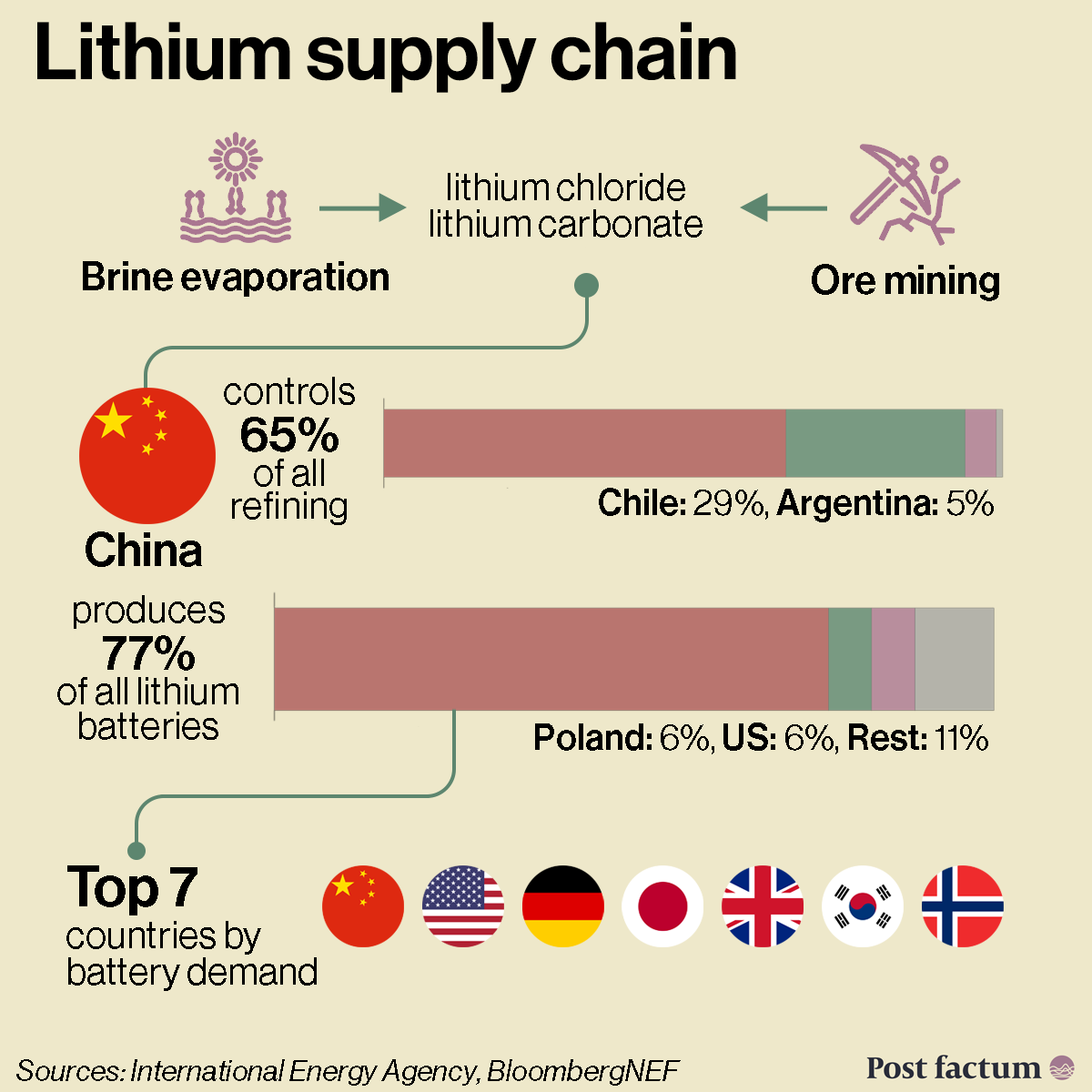
- For comparison, the lithium market size was $22 billion in 2023.
Demand is increasing, driven especially by electric vehicles and renewable energy.
Predictions suggest the market value could reach $8 billion by 2032.
Rare earths vs Critical minerals
Rare earth elements are part of the wider group of critical materials: those modern economies cannot run without and the supply of which is at risk.
This group also includes lithium, cobalt, nickel, gallium and other elements.
Why are rare earths separate?
Lithium, cobalt, and nickel are needed for energy storage (batteries), while gallium is used in semiconductors.
Rare earths are valued for their unique optical, magnetic, catalytic and other properties.
Moreover, unlike battery minerals, where existing innovations could reduce demand for cobalt or nickel, magnet rare earths have no near-future substitutes.
This makes their supply concentration a greater geopolitical concern.
Rare earthshave a more direct application in the defence sector: essential for missile guidance, stealth technologies, jet engines and radars.
- Neodymium and praseodymium are used in guidance and control systems for missiles, drones and jets.
- Dysprosium is added to magnets to ensure thermal stability, making it critical for fighter jet engines and systems exposed to high heat.
- Lanthanum and europium are essential in lasers, night-vision devices and targeting systems
For example, a single F-35 fighter jet requires 400 kg of rare earth elements to produce.
A Virginia-class submarine requires around 417 kg for its sonar, propulsion and weapon control systems.
Cruise missiles, drones and air defence radars are also particularly reliant on rare earths.
Given the strategic importance of rare earths, countries want to set up safe supply chains.
China
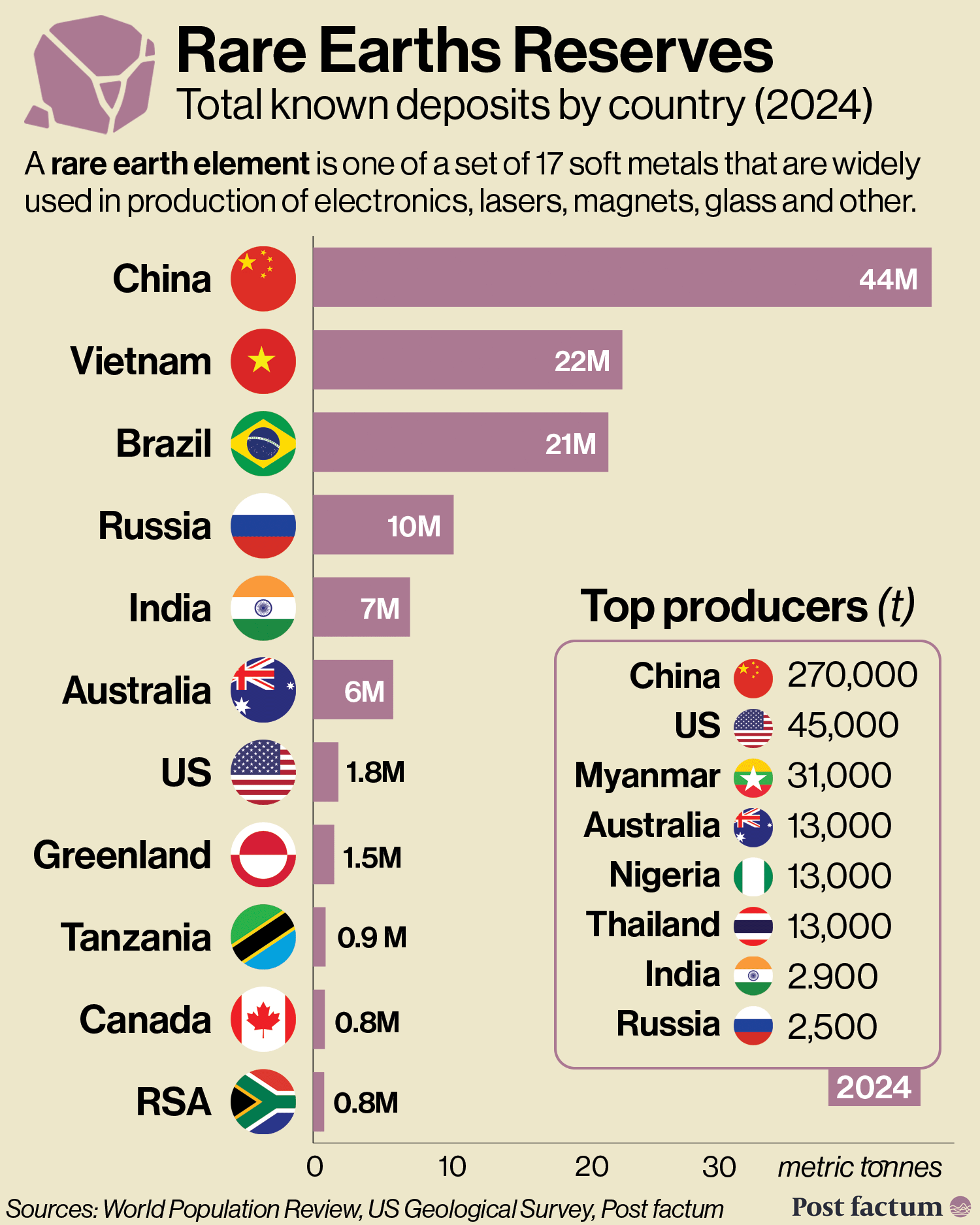
China has a near-monopoly on rare earths, controlling almost 90% of refining.
Since the 1980s, China has identified rare earths as a strategic resource, supporting the sector.
How China built its monopoly:
- Nationalisation (state ownership) of mining, processing and export processes
- Setting production limits (quotas) to keep prices high
- Lenient (weak) environmental regulations
In 2024, China formally declared all rare earths to be state property.
This reflects China’s broader strategy of treating rare earths and critical minerals as national security assets.
In 2010, China suspended rare earth exports to Japanafter a maritime dispute.
This disrupted Japan’s high-tech industries and showed how China could use its control over rare earths as a geopolitical tool.
In 2024:
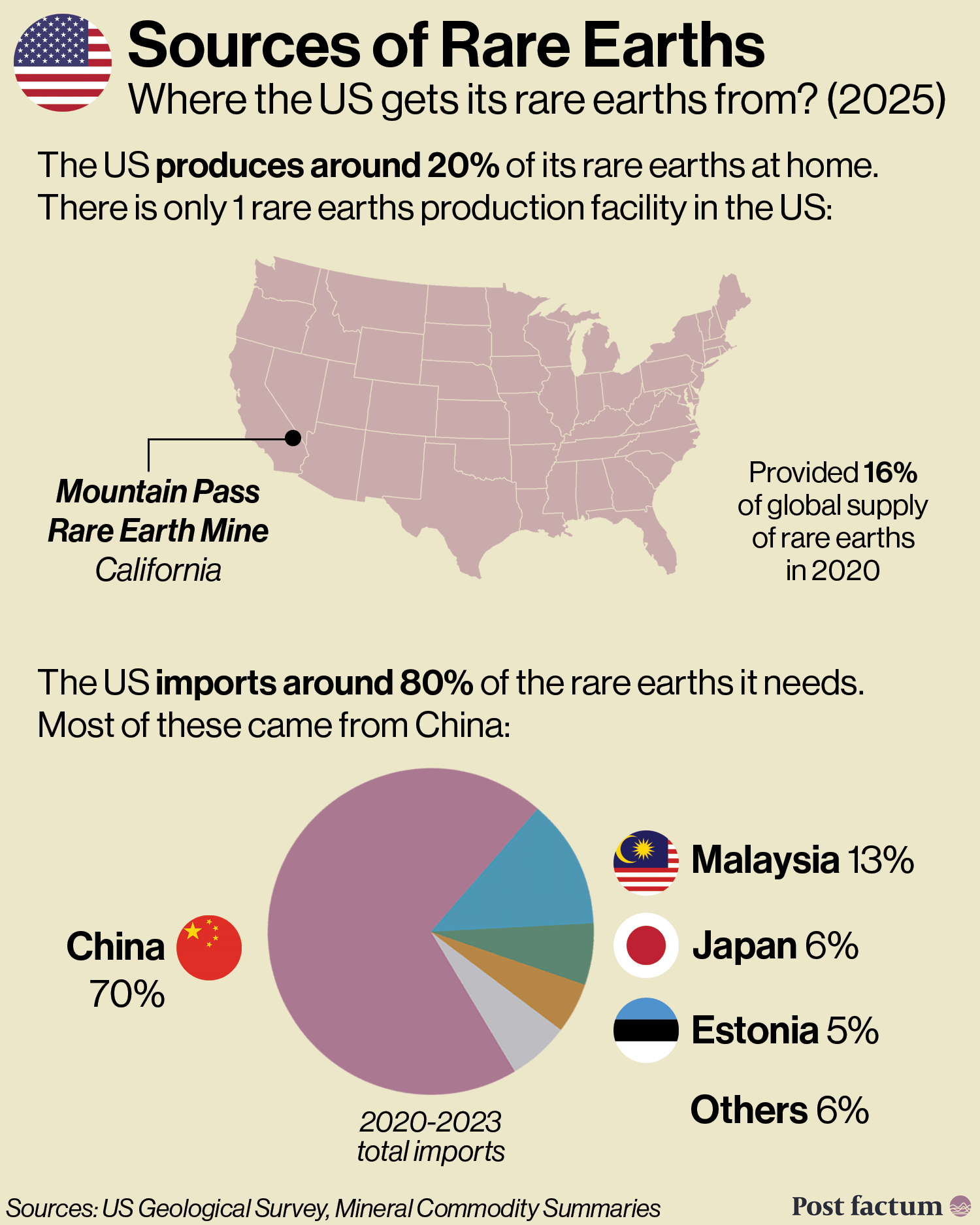
- The US imported 77% of rare earths from China
- The EU imported 46% of rare earths from China
In April 2025, China imposed export restrictions on seven rare earth elements in response to new US tariffs.
The restrictions targeted elements vital for defence technology.
In May 2025, China and the US signed a temporary deal to lower the tariffs and resume the flow of rare earths.