United States
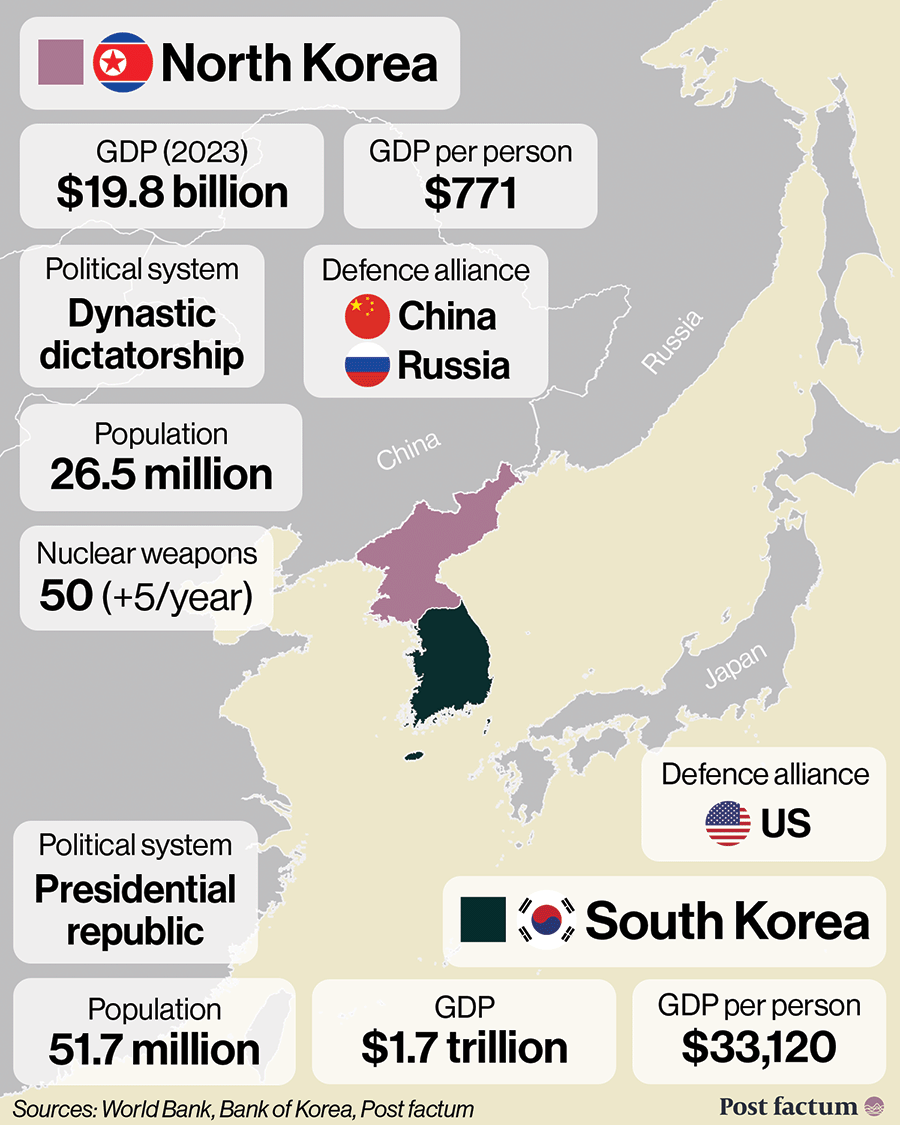
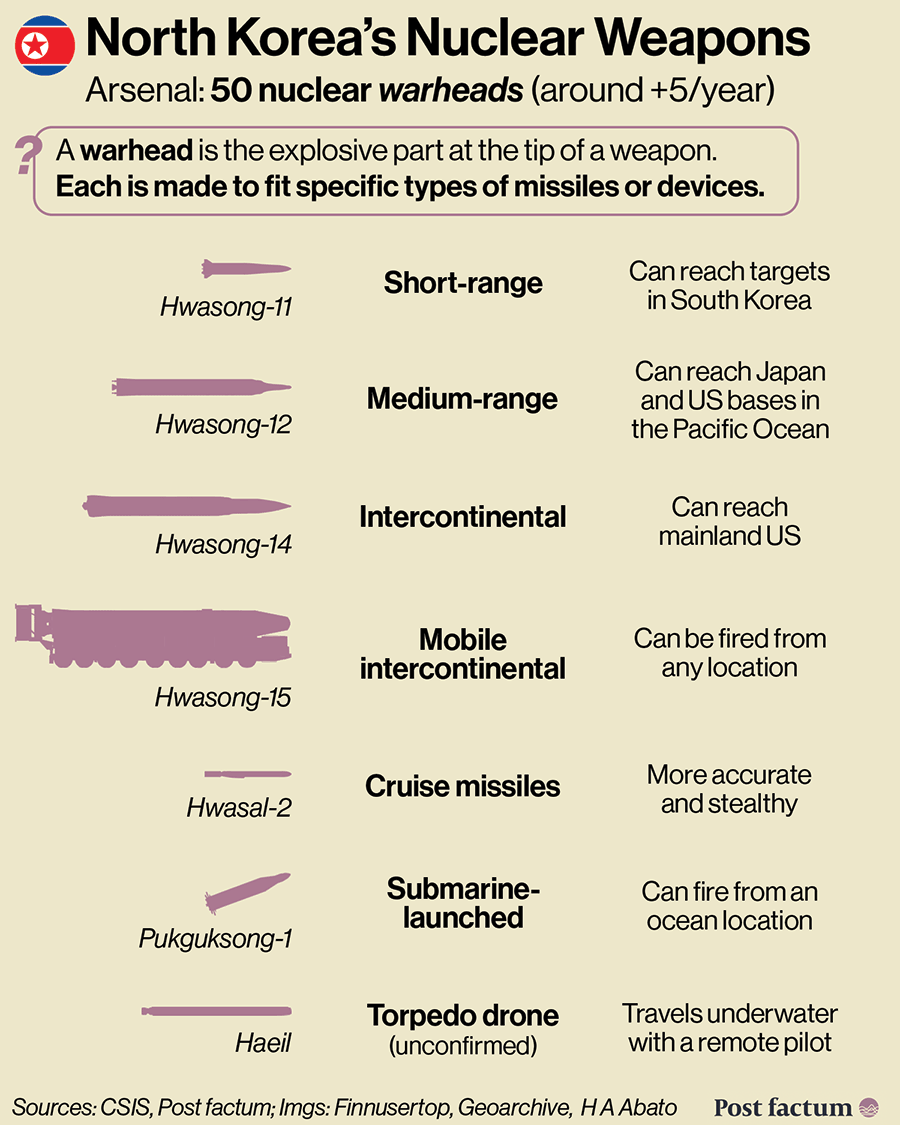
The US strategy toward North Korea relies on deterrence (threatening a response).
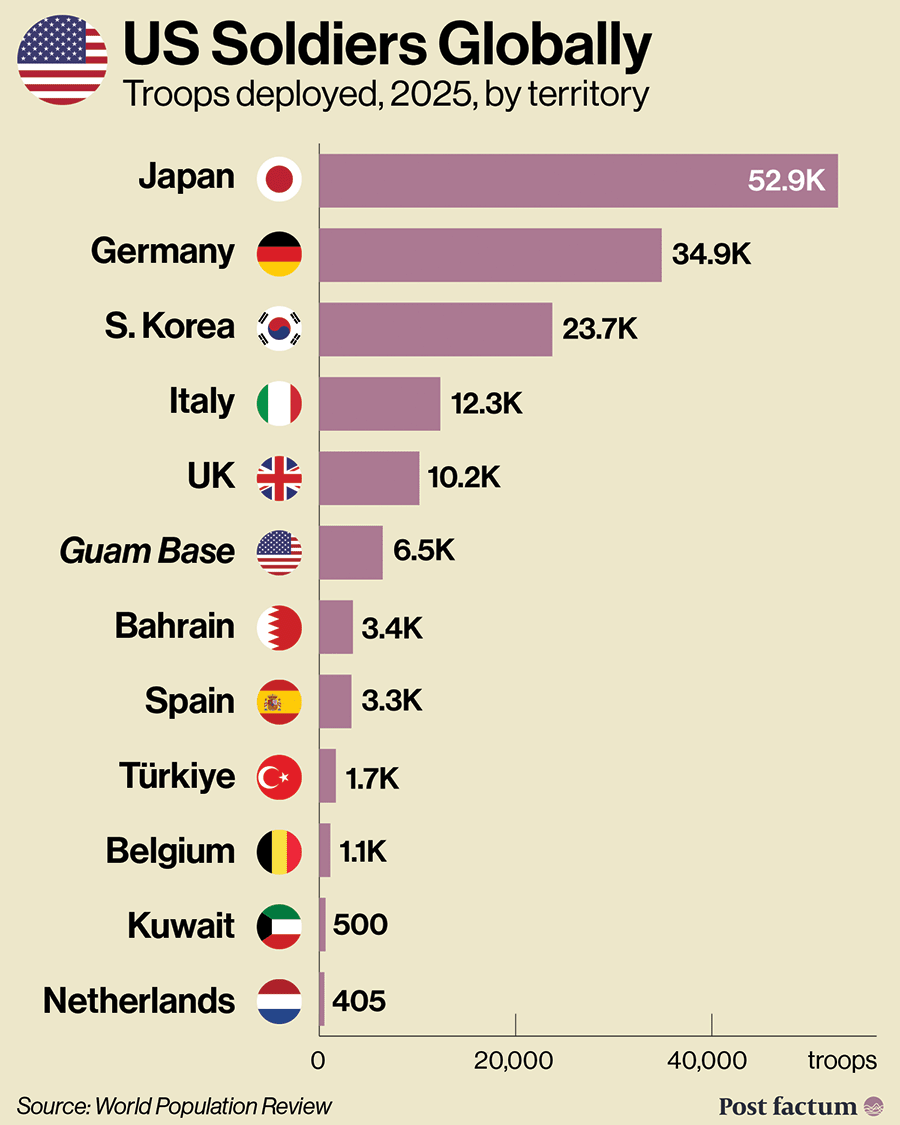
- Troop presence in Korea and in the region
- Regular joint military exercises with South Korea and Japan.
Goal: improving coordination between the allies, demonstrating the ability to carry out a joint military response.
Efforts to establish stable relations between the two countries have repeatedly failed.
Russia
Since the start of the war in Ukraine, the relationship between North Korea and Russia has deepened.
The partnership is driven by mutual need:
- North Korea needs basic aid such as food, electricity, and fuel, as well as diplomatic backing.
- Russia needs munitions, materials and manpower to support the war effort.
Since 2023, North Korea has sent $9.8 billion worth of weapons and ammunition to Russia.
- North Korea has sent approximately 5.8 million artillery ammunition, supplying almost 40% of the rounds that Russia has fired since 2023
In turn, Russia transfers civil aid and resources to North Korea.
However, it only amounts to an estimated $1 billion so far.
Russia likely provided some assistance in the production of drones, missiles, submarines and warships.
Russia is also training North Korean troops in electronic warfare and drone operations.
In June 2024, North Korea and Russia signed a defence agreement.
North Korean soldiers were sent to fight in the Kursk region of Russia after Ukraine successfully invaded part of it in 2024.
Around 10,000 North Koreans were fighting in Russia at one stage, but their presence is limited since 2025.
At least 600 North Korean troops have died so far.
China
China is North Korea’s major economic partner.
China accounts for 98% of North Korea’s total trade.
In September 2025, Kim Jong Un attended China’s military parade in Beijing.
The meeting renewed partnership between the countries after years of tensions.
North Korea closed all its borders during the COVID-19 pandemic, while also stopping trade with China.
China repeatedly called for the denuclearisation of North Korea and supported UN sanctions against it
China’s strategy toward North Korea focuses on:
- Countering US military presence in the region
- Avoiding instability on its own borders
China views the Korean peninsula as an important part of its regional security interests.
North Korea functions as a strategic buffer that keeps US forces at a distance from China’s border.
Therefore, keeping this division is important to maintain regional stability along its border.
China and North Korea signed a defence agreement in 2021.
This is China’s only formal military commitment.