Ukraine’s air defence
Since Russia’s invasion in February 2022, Ukraine has faced mass missile and drone attacks.
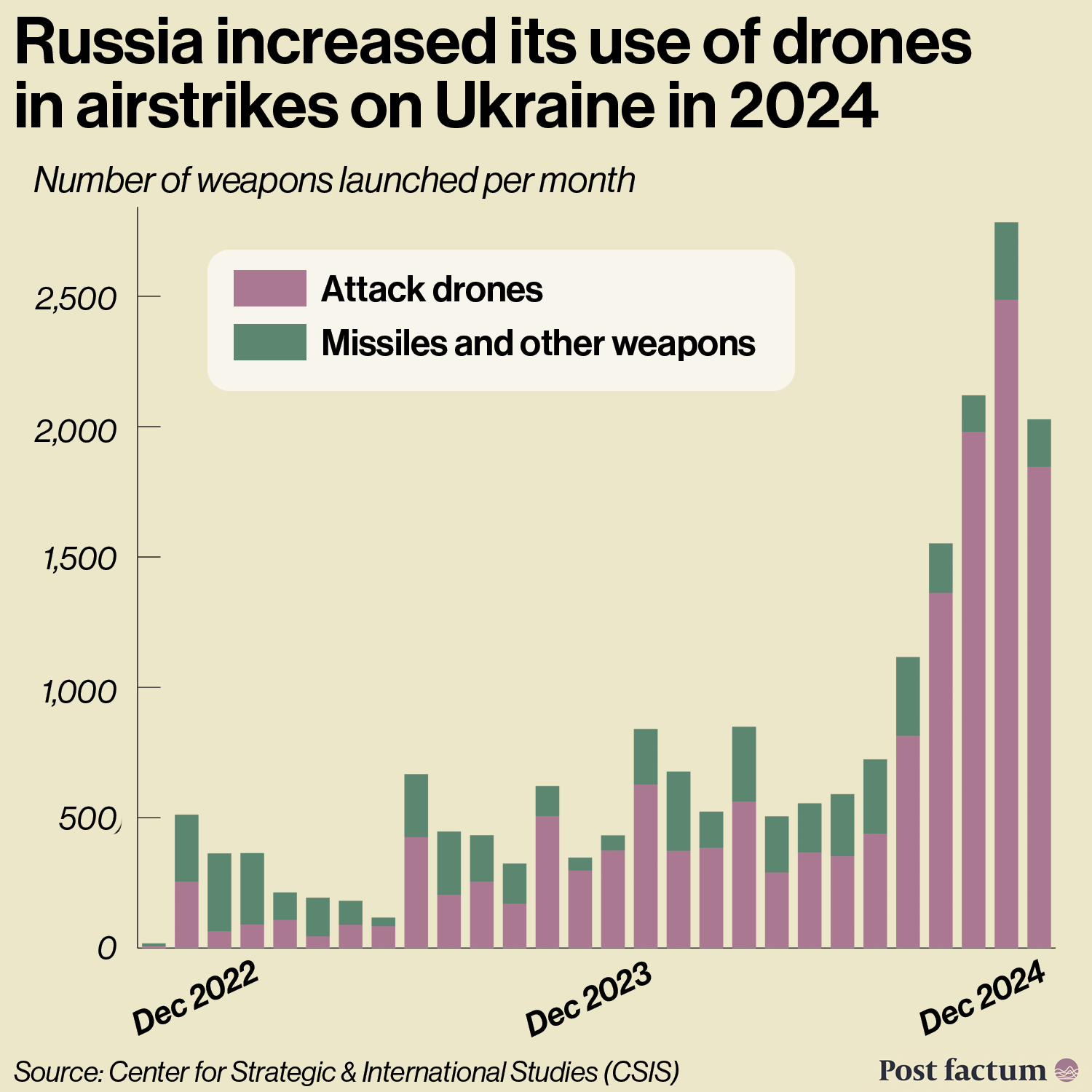
The use of drones by Russia has particularly increased since 2024.
Military and civil infrastructure in Ukraine is attacked daily with missiles, loitering munitions and drones.
Ukraine’s current air defence architecture has proven effective against Russian attacks, but this does not mean that all missiles and drones are intercepted.
Interception rates of Russian drones, particularly of the Iranian-designed Shahed, range between 80% and 90%.
On average, Russia attacks Ukraine with over 100 drones per day, meaning over 10 of them still hit the target.
Fibre optic drones are the latest innovation in drone warfare. They fly attached to a long cable which makes them immune to electronic jamming.
The interception rate of fibre optic drones is as low as 20% currently. However, they can only be used close to the front line and cannot target cities.
In 2022, Ukraine relied mostly on aging Soviet-era platforms (such as the S-300 and Buk systems).
As bombardments grew heavier, Western nations supplied advanced air defence systems.
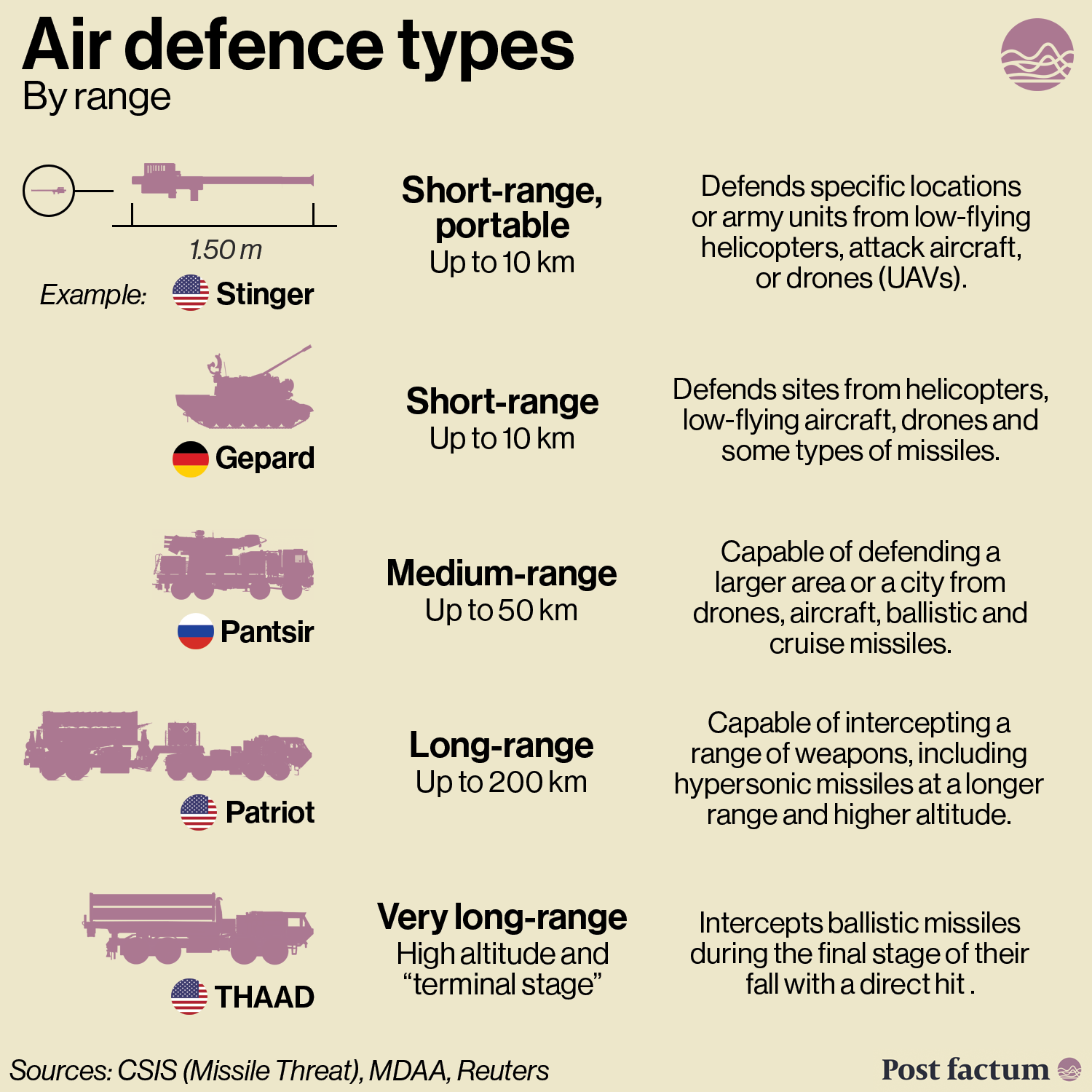
- In mid-2022, Germany supplied the first heavy air defence system to Ukraine, the Gepard.
Western military aid has played a key role in strengthening Ukraine’s air defences.
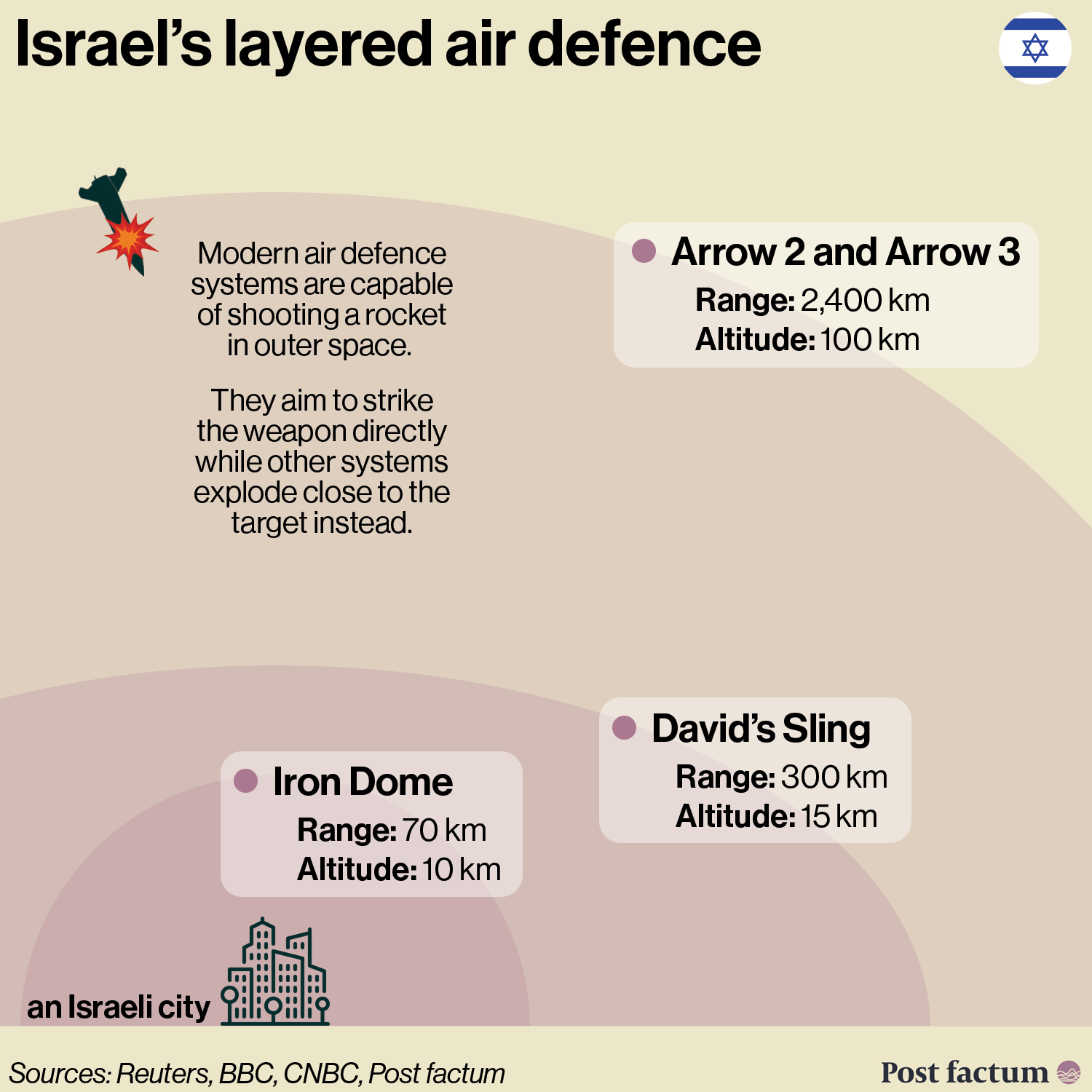
Advanced systems supplied by the allies allowed Ukraine to build a multi-layered shield capable of resisting the mass attacks.
For example:
- NASAMS batteries protect Kyiv against cruise missiles and drones.
- Patriot batteries intercepted multiple hypersonic missiles, marking one of the first real‑world tests of such capabilities.
Patriot systems are important to Ukraine’s air defence due to their effectiveness.
However, each battery costs approximately $1 billion, with individual missiles priced between $4 and $7 million.
- In July 2025, after an initial blockade, President Trump authorised the transfer of additional Patriot systems to Ukraine from US stockpiles. However, NATO allies will finance the restocking.
Ukraine has developed improvised and decentralised drone interception tactics.
Mobile teams equipped with Stingers and electronic warfare tools now patrol key sectors, responding to daily drone raids, especially around energy infrastructure and logistics hubs.
This innovation, mixing NATO modern systems and improvised countermeasures, has proven especially effective against Shahed drones, keeping their penetration rates below 20%.
For NATO and its allies, Ukraine is now a testing ground for modern integrated air and missile defences.
However, a major challenge is the cost asymmetry between offensive missiles and defensive interceptors.
For example:
Intercepting a single Russian Iskander ballistic missile often requires 2-3 Patriot interceptors, each costing around $4 million.
As a result, defending against a $3 million Iskander strike can cost up to $12 million.
This imbalance is a sustainability issue for Ukraine, especially as Russia continues to try and overcome Ukraine’s air defences by increasing the number of drones launched at the same time.