Technology and AI
China's tech sector is largely state-controlled, while India has greater private competition.
The consequence: China rolls out the latest technologies faster and at a larger scale (such as facial recognition and electric vehicles) but with more state intervention and censorship.
In 2021, India launched a $10 billion program to boost its semiconductor industry and compete with China.
- India's semiconductor market value grew from $22 billion in 2021 to $52 billion in 2024, still below China's $183 billion that year.
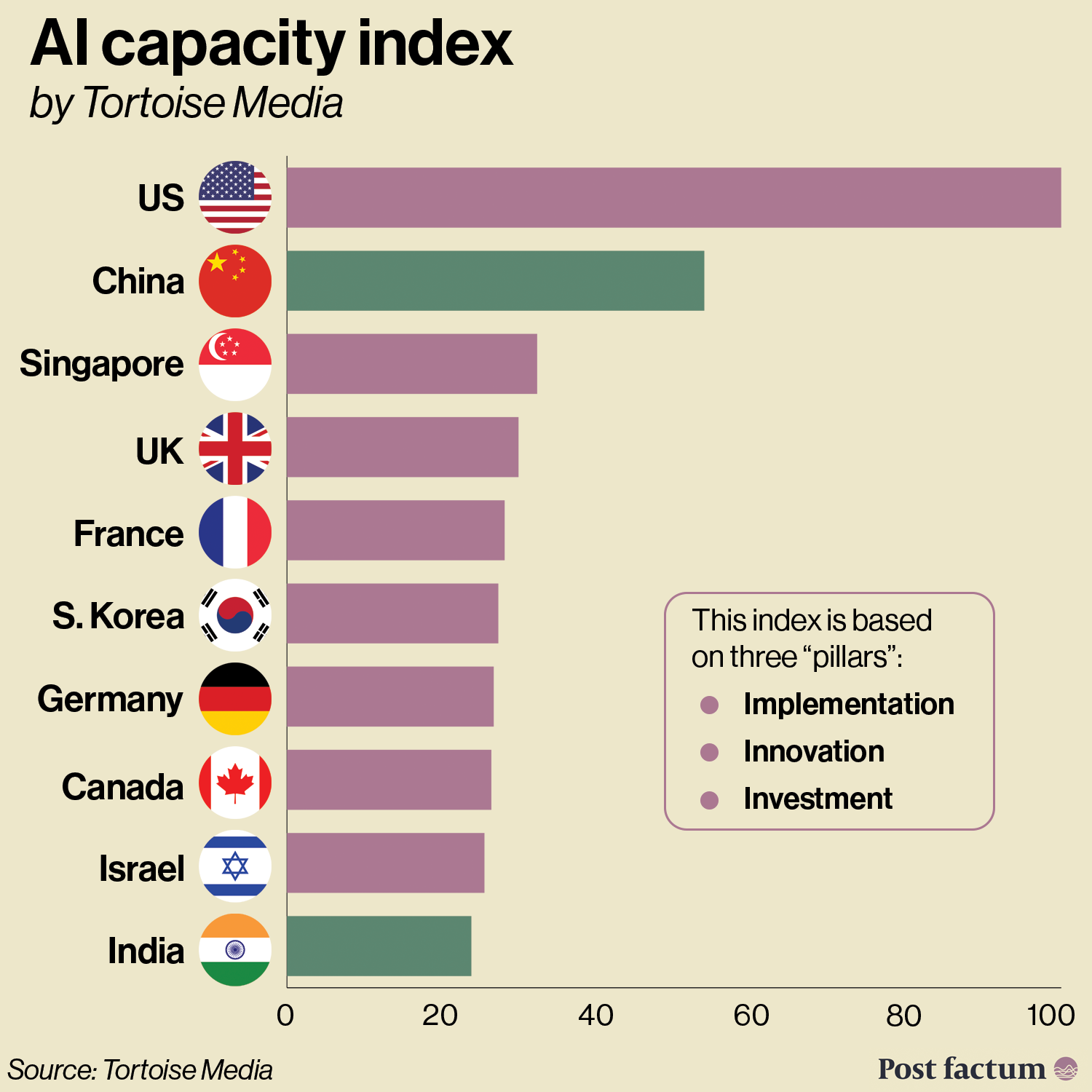
In 2024, China invested $58 billion in AI, compared to India's $1.25 billion.
- The same year, private investments in AI were $9.3 billion for China and $1.2 billion for India.
India's main weakness in this sector is poor infrastructure while its strength lies in the tech-skilled labour force.
India signed technology partnerships with the US, EU, Japan and Australia, while China prioritised ties with Belt and Road Initiative participants.
Global governance
China and India see themselves as leaders and competitors in Asia and the Global South.
India is cautious about the rise of China's currency (renminbi) and prefers to promote the Indian rupee in the global financial system.
- India left the RCEP, a free trade agreement involving 15 Asia-Pacific countries, due to concerns over an influx of Chinese goods into its market.
India has refused to join the Belt and Road Initiative, objecting to infrastructure projects in disputed Pakistan territory.
India has joined some China-led international organisations like the Shanghai Cooperation Organisation (SCO) but has not prioritised engagement to balance its relations with the US.
China opposes India's bid for a permanent UN Security Council seat to keep its status as the only member from Asia.
In 2022-2023, India's UN General Assembly votes aligned with those of China 81% of the time. India's votes aligned with the US 38% of the time.
- China's votes aligned with the US 28% of the time.
Future scenarios
There are four key input factors affecting long-term relations between China and India.
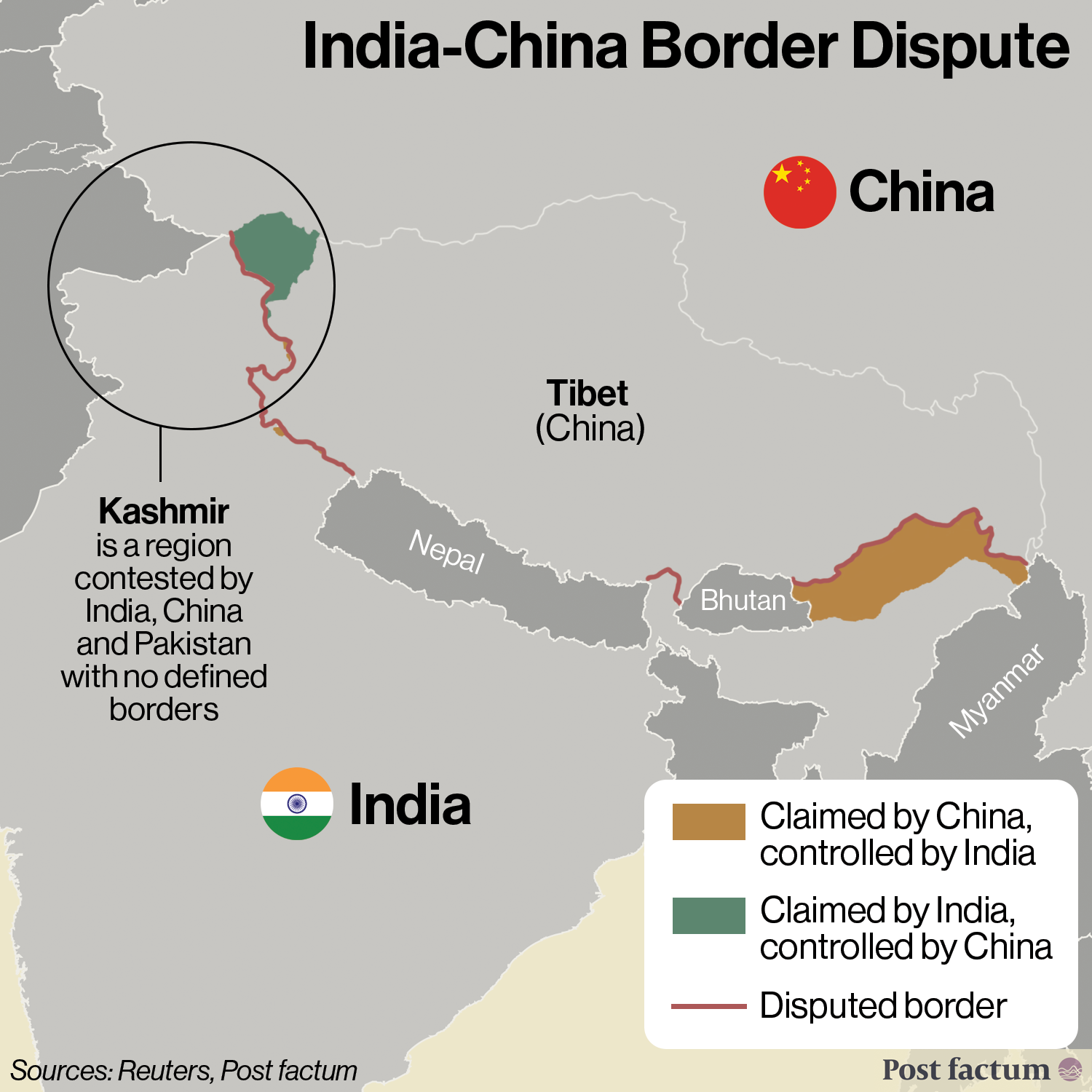
- Territorial disputes over the LAC.
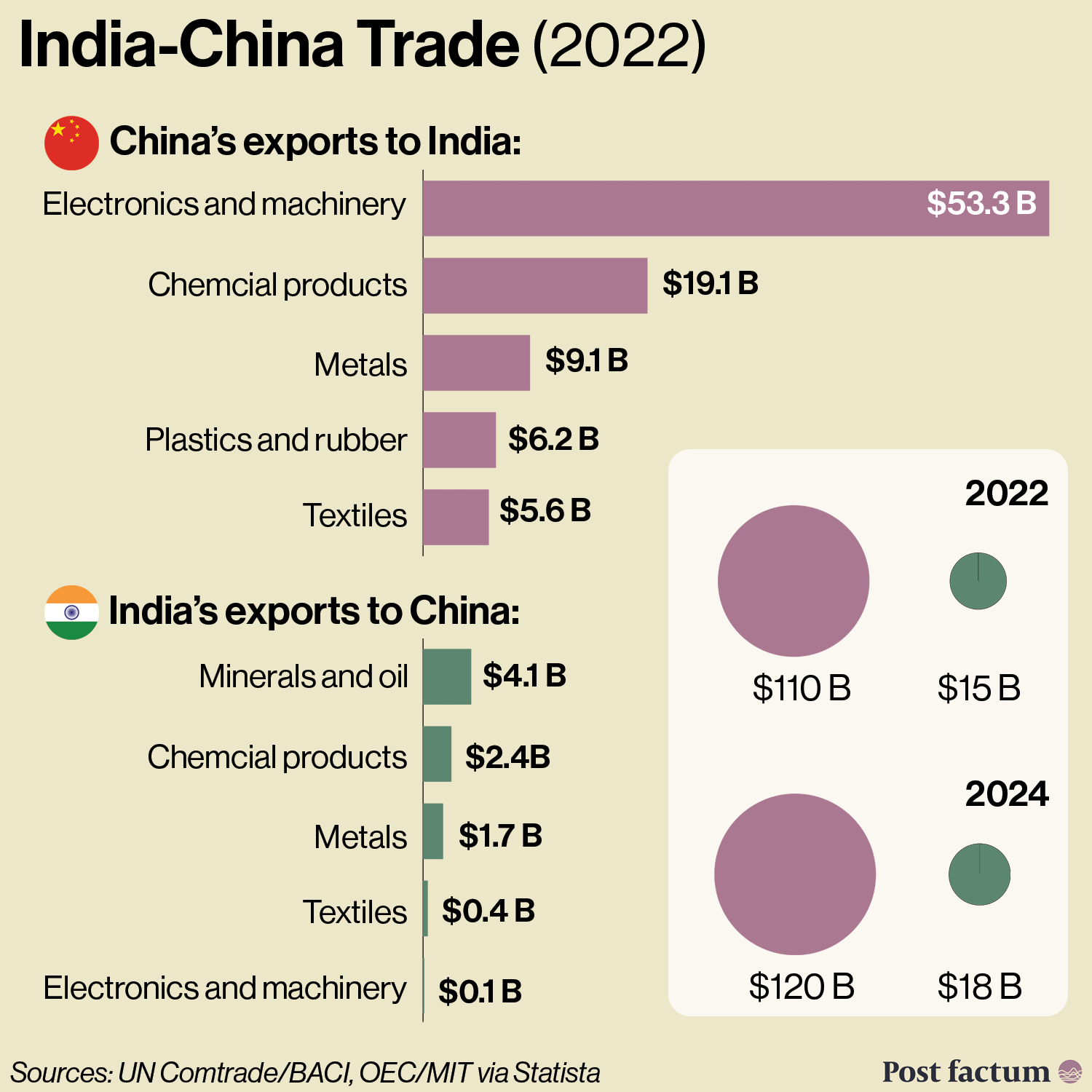
- India's economic dependence on China.
- Foreign policy, especially relations with Pakistan and the US.
- Public opinion and domestic policies under Xi Jinping and Narendra Modi (or their successors).
Scenario 1 - Competitive coexistence
Summary: China and India maintain their dual-track relationship which involves cultivating economic ties and managing their border dispute without reaching a stable solution.
India's trade deficit remains significant, and minor border clashes occur.
China strengthens its ties with Pakistan, while India remains close to the US.
Scenario 2 - Strategic cooperation
China and India agree on a defined border and withdraw more of their troops.
The countries increase bilateral investments, especially in key sectors like electronics and pharmaceuticals.
China-US and India-Pakistan ties improve, fostering mutual trust in the Asia-Pacific region.
Scenario 3 - Armed conflict
Low-intensity clashes escalate into a larger-scale conflict.
Economic ties are drastically downscaled or cut completely, damaging India’s manufacturing and pharmaceutical sectors.
China could also use its leased port in Sri Lanka to blockade Indian sea trade.
Pakistan supports China, potentially with strikes on India, while the US mediates the conflict without direct involvement.
Pakistan has used Chinese-made equipment against India during a brief escalation in May 2025. In particular, it shot down India’s French-made Rafale fighter jets with its J-10s.