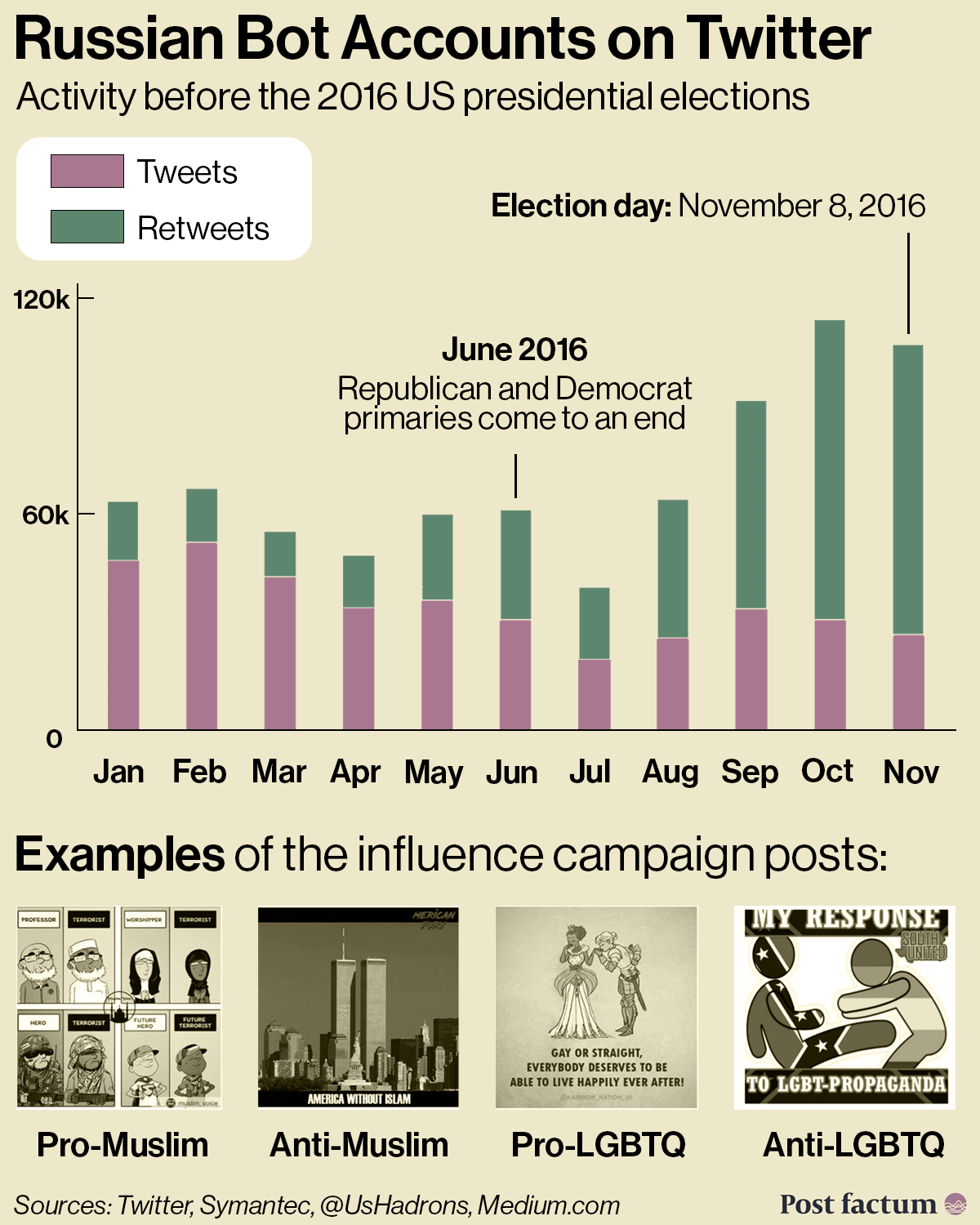
In 2024, the first round of Romanian presidential election was annulled (declared invalid) due to Russian interference.
On the day of publication, Moldova holds parliamentary elections amid fears of Russian interference.
During the COVID-19 pandemic, the US ran an information campaign in the Philippines against China’s vaccine, claiming it was unsafe.
The US was concerned that China’s influence was growing in the Philippines, US’ strategic partner in the Pacific.
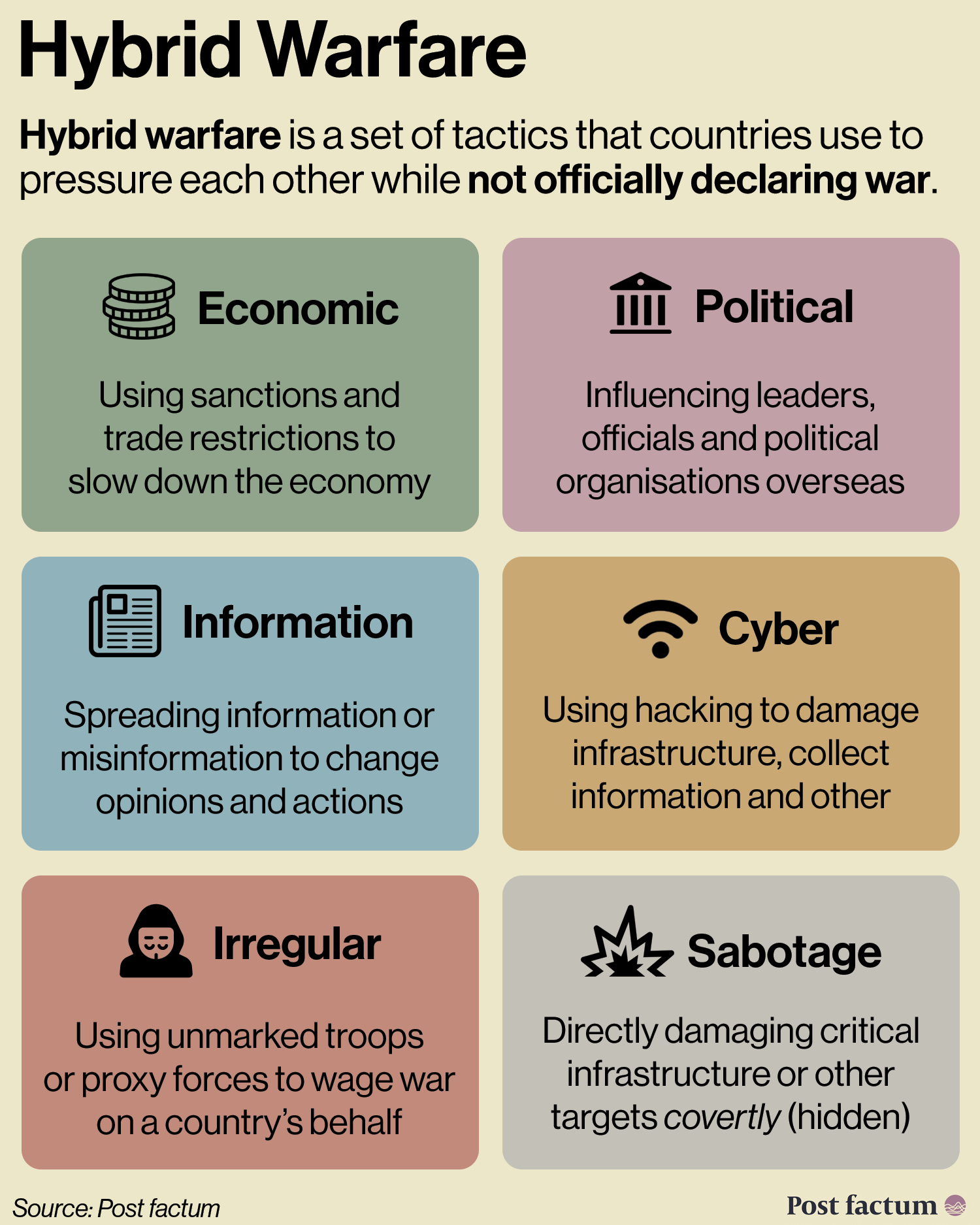
Cyber warfare
An increasingly digital world has made cyber warfare a more powerful tool.
States or state-backed groups can hack foreign governments, businesses and individuals to advance their own interests.
Cyber espionage is the gathering of strategic information about the opponent through hacking.
Hackers can damage or destroy critical infrastructure, such as energy grids, communication systems, banking services or hospital equipment.
Electronic warfare also takes advantage of our highly technologically dependent world.
It involves directly affecting electronic devices in an area with signal jamming or magnetic impulses.
Electronic warfare can target satellites in space, disrupting navigation and communications.
The risk of being disconnected from the American GPS satellite navigation system has led Russia and China to develop alternatives.
Irregular warfare
It is closer to conventional war than the types mentioned previously.
Irregular warfare involves using soldiers and equipment that are not officially a part of the country’s military.
Proxy forces are military groups that are trained, equipped and directed by a foreign government to do the actual fighting on their behalf.
Iran has assisted local militias in Lebanon, Iraq, Syria and Yemen that share its anti-Israel and anti-US stance and supported them in their actions indirectly.
Similarly, governments may provide support to insurgent or terrorist groups fighting a rival.
Unmarked troops consist of regular soldiers fighting for their governments but without wearing insignia (military badges).
This allows governments to deny involvement in case unmarked troops are revealed.
Russia used unmarked troops to secure control of Ukraine’s Crimean Peninsula before annexing the territory in 2014.
Sabotage, such as destroying physical infrastructure, also has deniability while harming an adversary.
Since 2022, Russia has carried out a series of sabotage attacks on Europe, including damaging energy infrastructure and cutting underwater communications cables.
Civilians can also be used as a hybrid warfare tool.
In the South China Sea, Chinese fishing fleets have been supporting Chinese territorial claims while pushing back against foreign governments.
Hybrid warfare often relies on using society against itself to apply pressure.
Countries like Belarus, Tunisia and Turkey have influenced and pressured the EU by managing the flow of refugees into the bloc.
The goal is to create domestic political opposition as well as to put pressure on limited resources.
In response, governments like Poland have built fencing and other barriers to keep migrants out while European governments are also negotiating with nearby countries to prevent future irregular migration.
Hybrid warfare is related to the concept of soft power:
Soft power means influencing other countries through economic and cultural means, making it beneficial for them to follow the same goals.
Countries often view their hybrid warfare actions as an expression of soft power.
However, destructive or violent tactics are not normally considered a use of soft power.