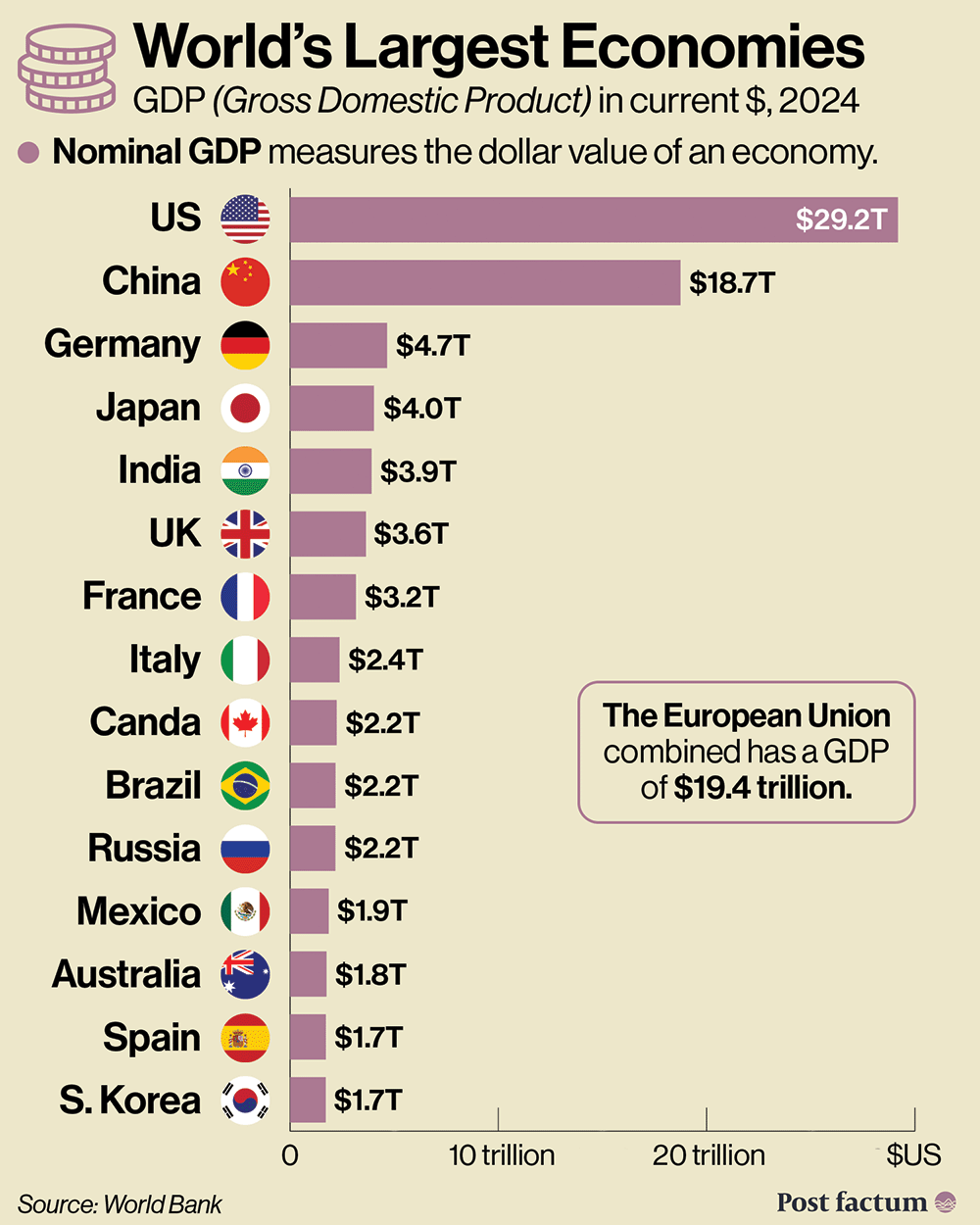
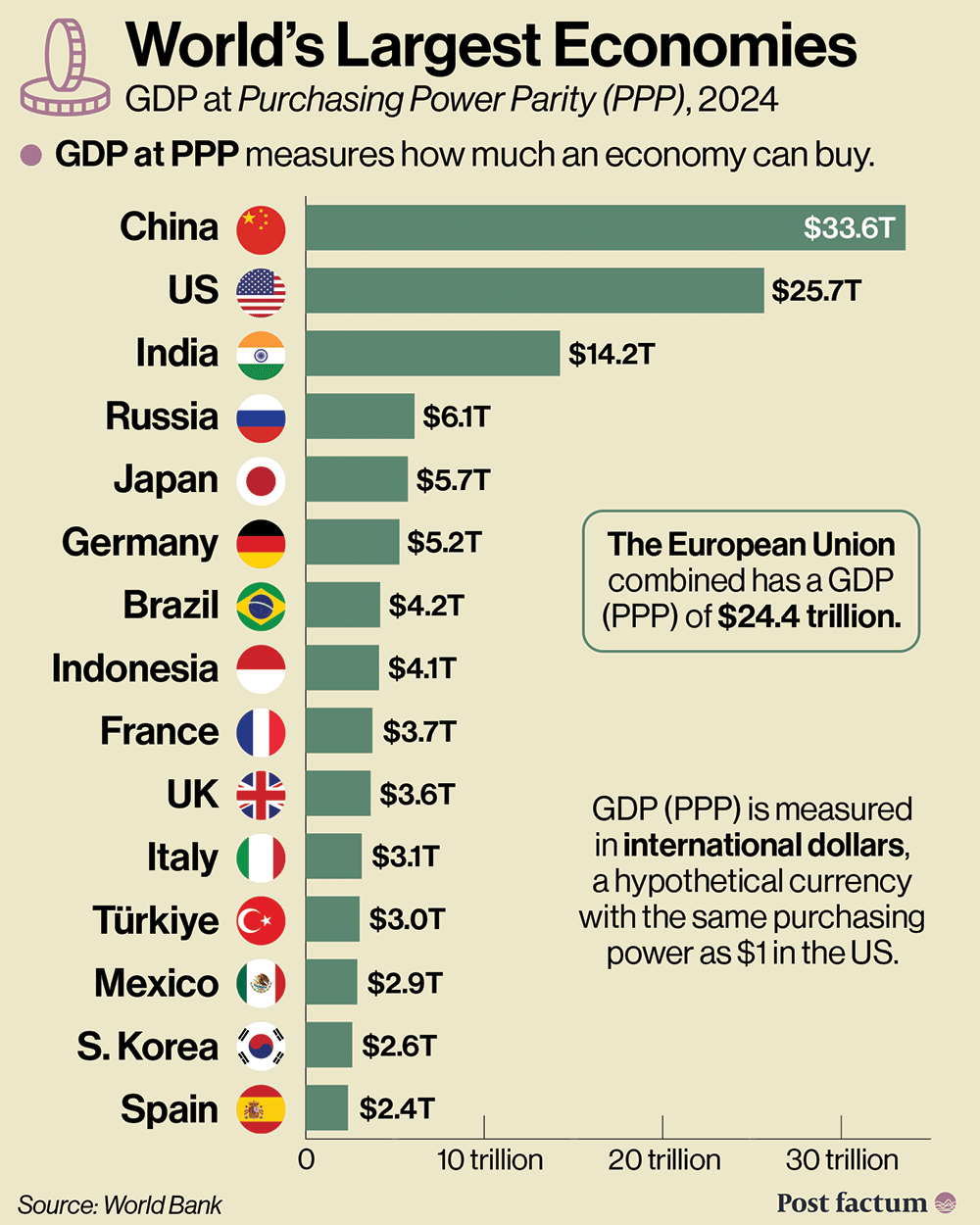
China is the largest economy by GDP (PPP) at $33T. The US is second with $26T.
The collective EU measures at $24T, and India follows with $14T.
GDP per capita
To see how productive people are on average, GDP can be divided by the country’s population, giving GDP per capita.
- This does not show how incomes are distributed between people.
Countries are labelled as low, middle, or high-income, reflecting their productivity and standards of living.
High-income countries are sometimes called “developed”, while the low- and middle-income ones are referred to as “developing” or “emerging economies”.
Economic growth
Economic growth is the increase in GDP over time. It is calculated using real GDP.
Real GDP corrects nominal GDP for inflation, so that GDP is not showing price increases as growth.
Growth means the economy produces more goods and services, but this does not take into account how useful they are.
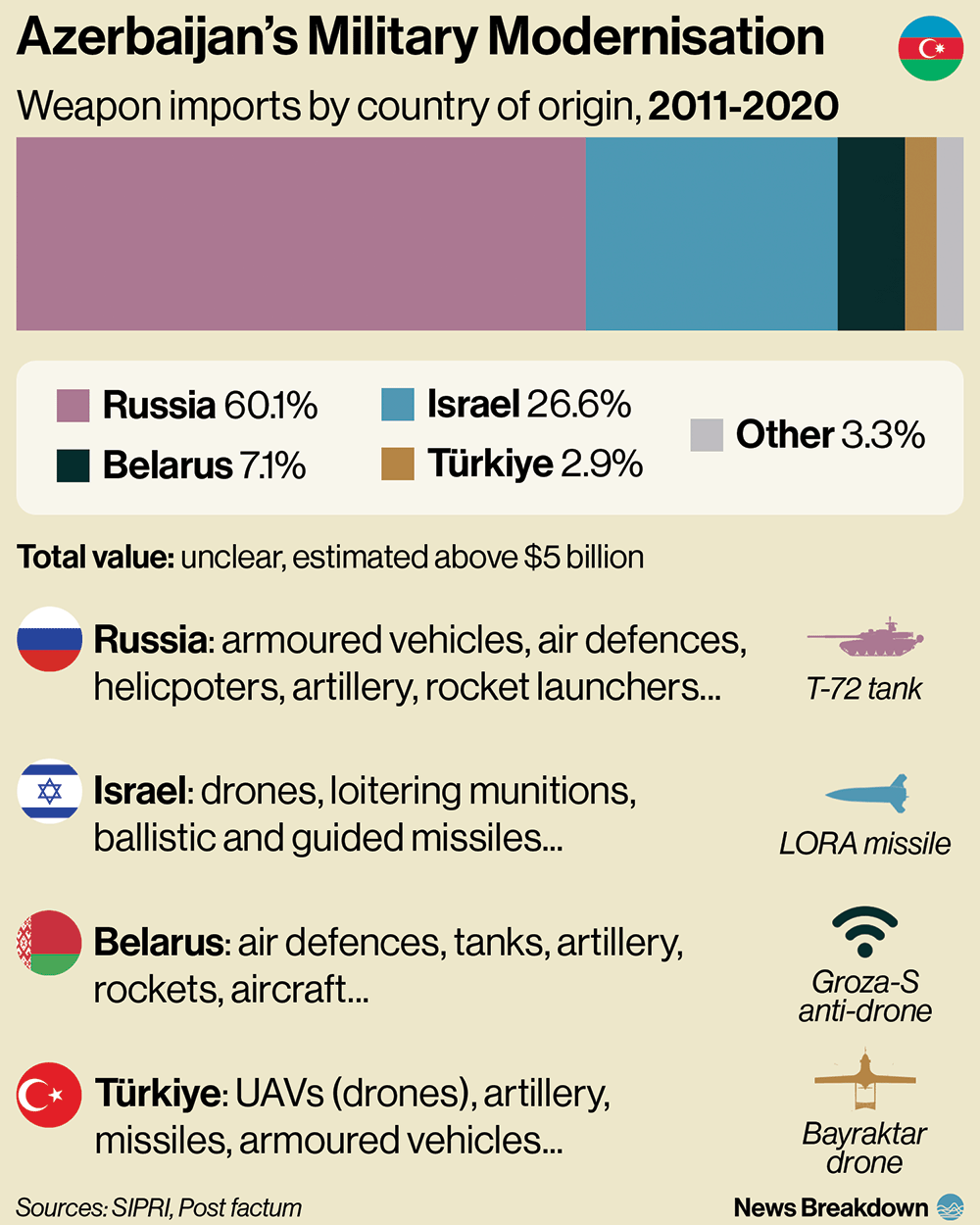
For example, government spending on weapons or soldiers’ contracts boosts GDP but may not create economic value.
- Historically, investing in weapons sometimes paid off with the capture of foreign land, resources or even people.
- For most countries, military spending also provides defence.
Extensive growth comes from adding more inputs like work, money, equipment, or land into the economy.
Intensive growth comes from using existing inputs more productively, often through innovation.
One country’s growth does not create another country’s loss:
- China’s rise in manufacturing over recent decades didn’t stop the US or the EU from growing in services and technology.
- The world’s GDP (PPP) has increased by more than 6 times since 1990, showing that many economies can grow together.
Countries with higher incomes and living standards tend to grow slower:
- Their populations are aging, so fewer people work and spend.
- Their economies are already industrial, so productivity is harder to improve.
- They often have higher debt, which limits new investment.
In 2025, the US economy grew by 2%, while the EU grew by 1% on average.
Low- and middle-income countries usually grow faster:
- They have younger and growing populations.
- They benefit from catch-up effects: countries can use innovations from more developed states (such as by importing equipment)
- Marginal gains: at lower GDP, extra productivity makes up a larger share of the total.
India is one of the fastest-growing economies (at 6%) but also one of the largest.
China grew by 4% in 2025 (down from a peak of 14% in 2007).
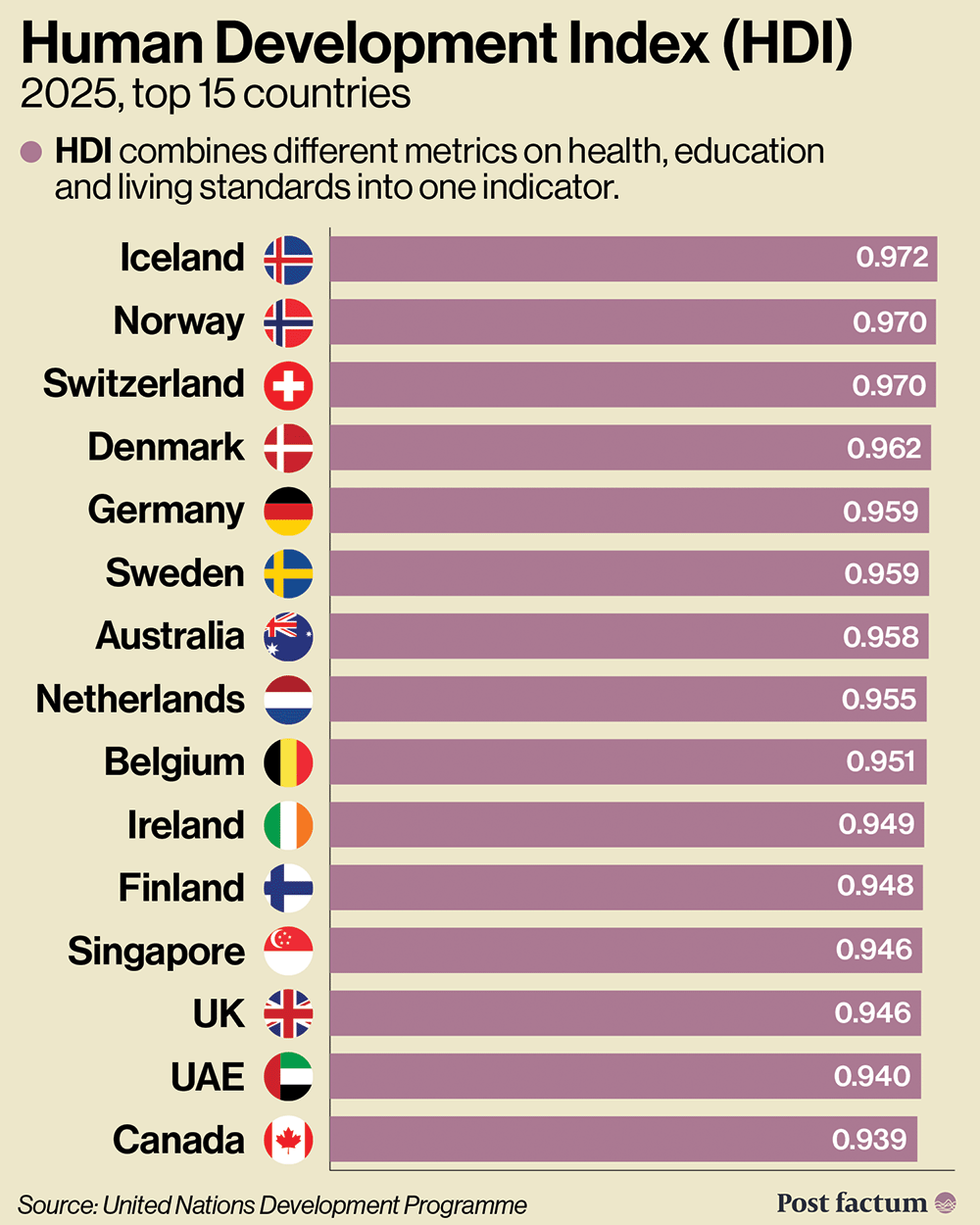
As discussed, GDP and economic growth don’t tell the full story on progress and development: