7 Terms to Understand Oil Geopolitics
Refining
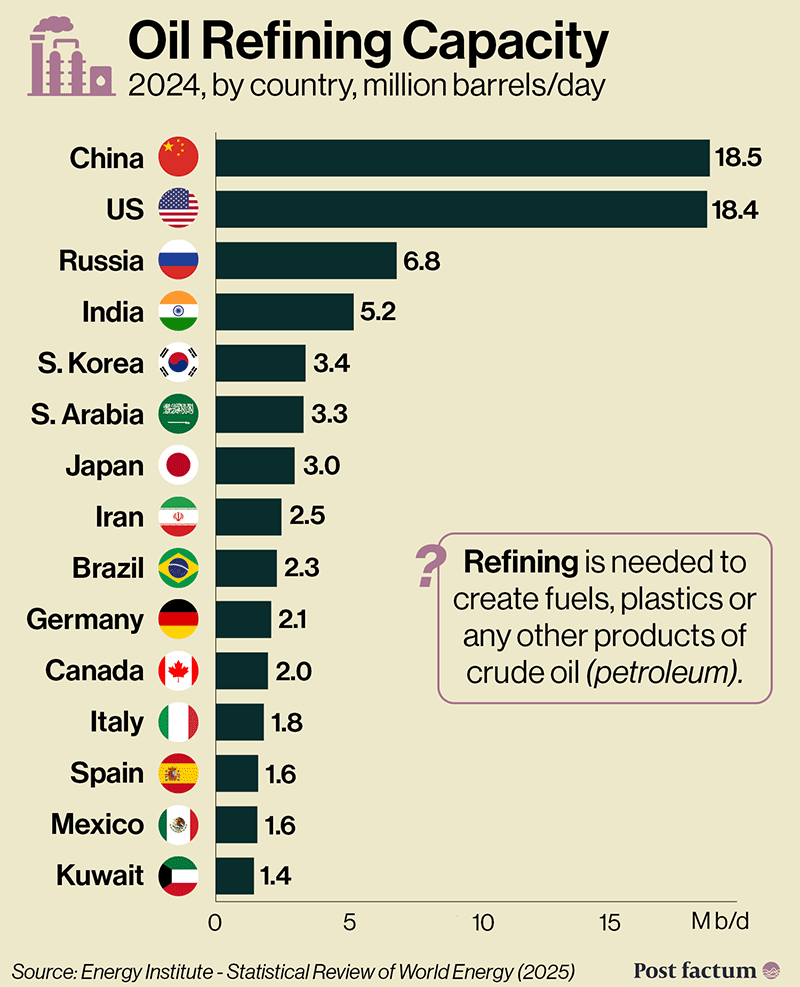
Crude oil must be refined before it can be used as fuel or material for plastics, synthetics and other products.
Refining is a complex industrial process that needs expensive infrastructure.
Many oil-producing countries do not refine their oil and instead export it raw, then importing the products made from it.
True self-sufficiency in oil requires enough of both production and refining capacity.
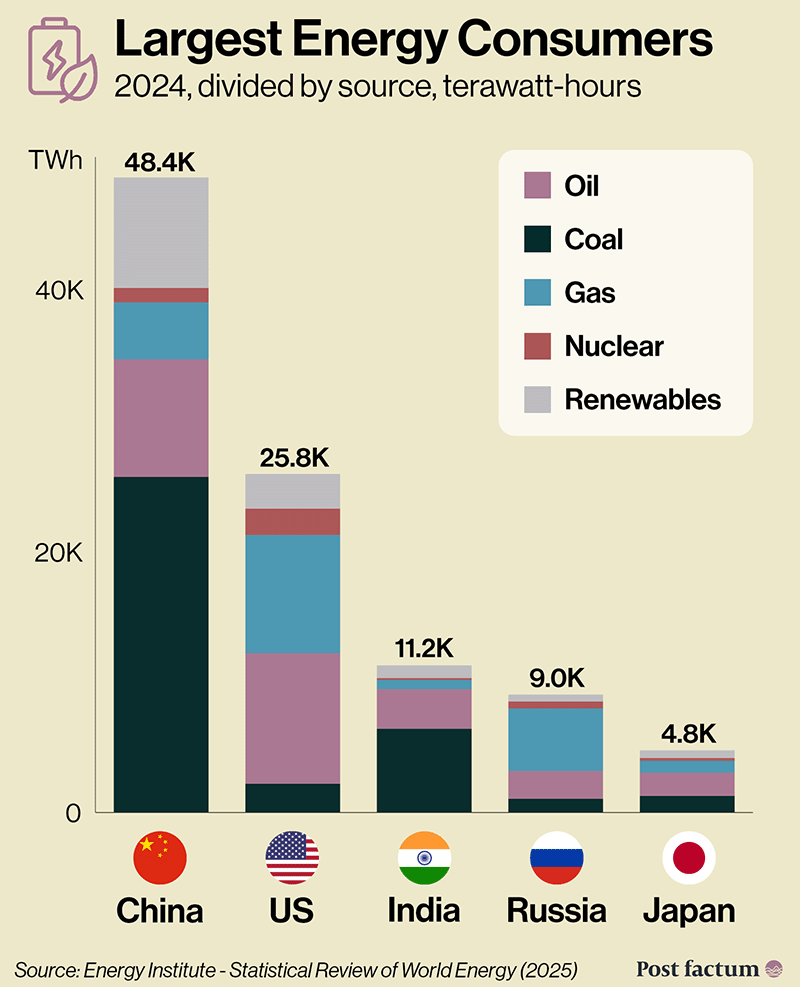
China (which consumes lots of oil without producing much) has a vast refining capacity.
Refining helps China counteract its dependency on exporters of oil with their own demand for refined oil products.
Shale energy
Shale is a type of layered rock that often holds crude oil and natural gas.
innovations in drilling allowed to increase the efficiency and output of shale oil and shale gas industries.
The United States expanded these sectors significantly since 2008. They now account for about 50% of the country's oil and gas production.
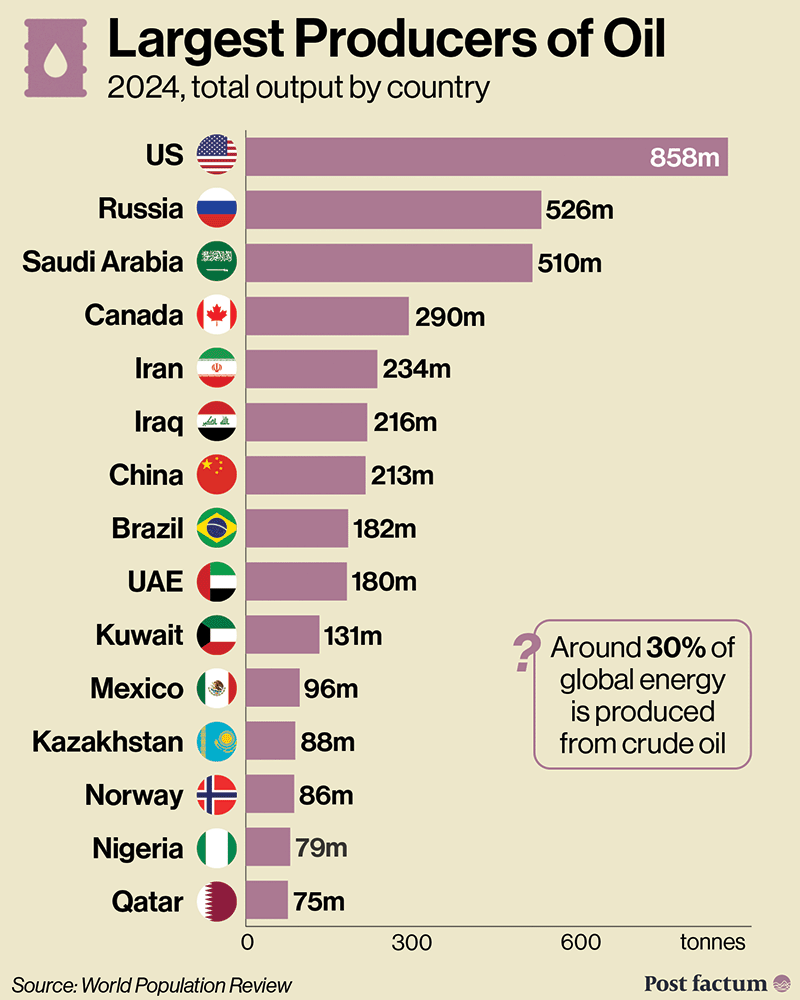
This growth allowed the US to become the largest producer of oil.
Shale oil is more expensive to produce than other types and requires higher market prices of oil to be profitable.
Saudi price war of 2014-16 was targeting the US shale industry by lowering global prices, but it survived.
An advantage of shale extraction is that it can be paused and restarted at any time, unlike regular oil extraction.
Cost of production
Depending on the location and the type of the oil, technological and industrial specifics, some countries can produce oil much cheaper.
In Saudi Arabia production costs are around $5-10 per barrel. In Russia’s — $15-20.
The US the costs range from $30-70 per barrel, with shale oil being more expensive.
At any given price some oil producers can profit and others can struggle.
Break-even price
Break-even is a specific price at which the earnings from oil sales will cover the country’s overall budget deficit.
Some countries rely on oil exports for a large part of their revenue and need to sell their oil at a certain price to get enough.
- For example, Saudi Arabia enjoys a low cost of producing oil ($10), but they must sell it at a higher price ($90) to not have a budget deficit.
Currency reserves
Currency reserves is the foreign currency (especially the US dollar) held by a country.
Having enough foreign currency is needed to buy imported goods.
Saudi Arabia used its currency reserves to balance its budget while waging price wars.
Hedging profits
Hedging is a strategy when one investment is balanced with its opposite, so that you do not lose as much in case the original position fails.
In the case of crude oil: when producers enjoy high oil prices, they can hedge their risk by betting on oil prices to fall, expecting to gain profit whichever way prices go.
This is important for planning long-term investment into expanding production, as having hedged future profits provides security.
Self-sufficiency
In an ideal world, countries would buy their oil at the cheapest prices from the best producer.
In reality, when the producer gains too much power over the buyers, it can use this dependency to increase prices and punish the buyers.
Because of this, countries want to achieve self-sufficiency in oil: independence from imports.
For example, the US increased its production by expanding shale oil, meaning they can cover their own demand. High refining capacity also helps this.
In contrast, European countries produced energy from imported oil and gas, especially from Russia.
- Cutting off trade with Russia after its invasion of Ukraine increased the prices of energy and required finding new suppliers, costing the EU over $300bn in energy subsidies alone.