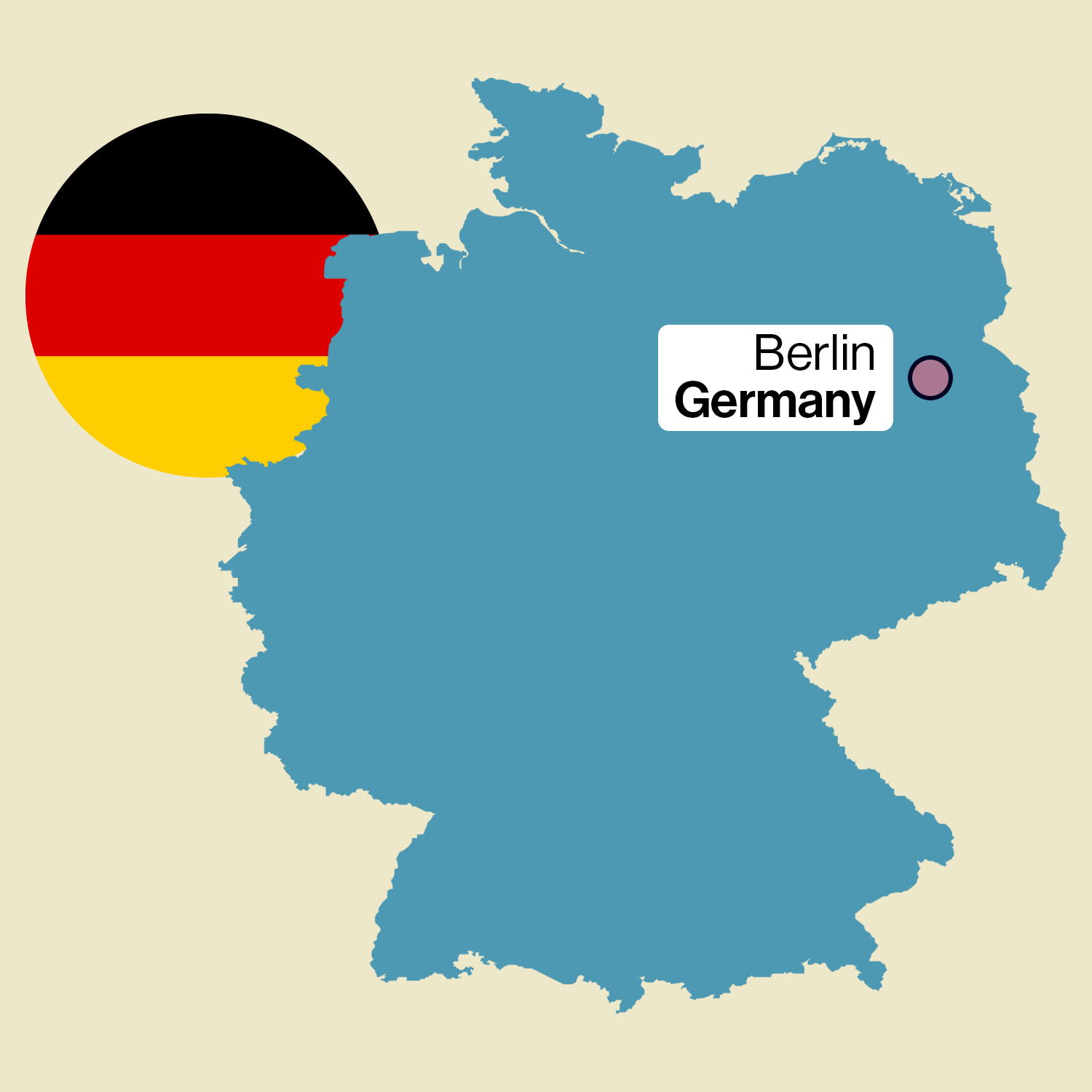
Alternative for Germany (AfD) is a German political party formed in 2013.
- Its focus then was to oppose the bailouts (financial support) to the economies of Greece, Portugal and other countries failing during the eurozone crisis.
- After the 2014 European refugee crisis, the AfD added active opposition to migration as its key policy promise.
- AfD missed out on seats in the German parliament in 2013 but got them in 2017 and 2021 with 13% and 10% of the votes.
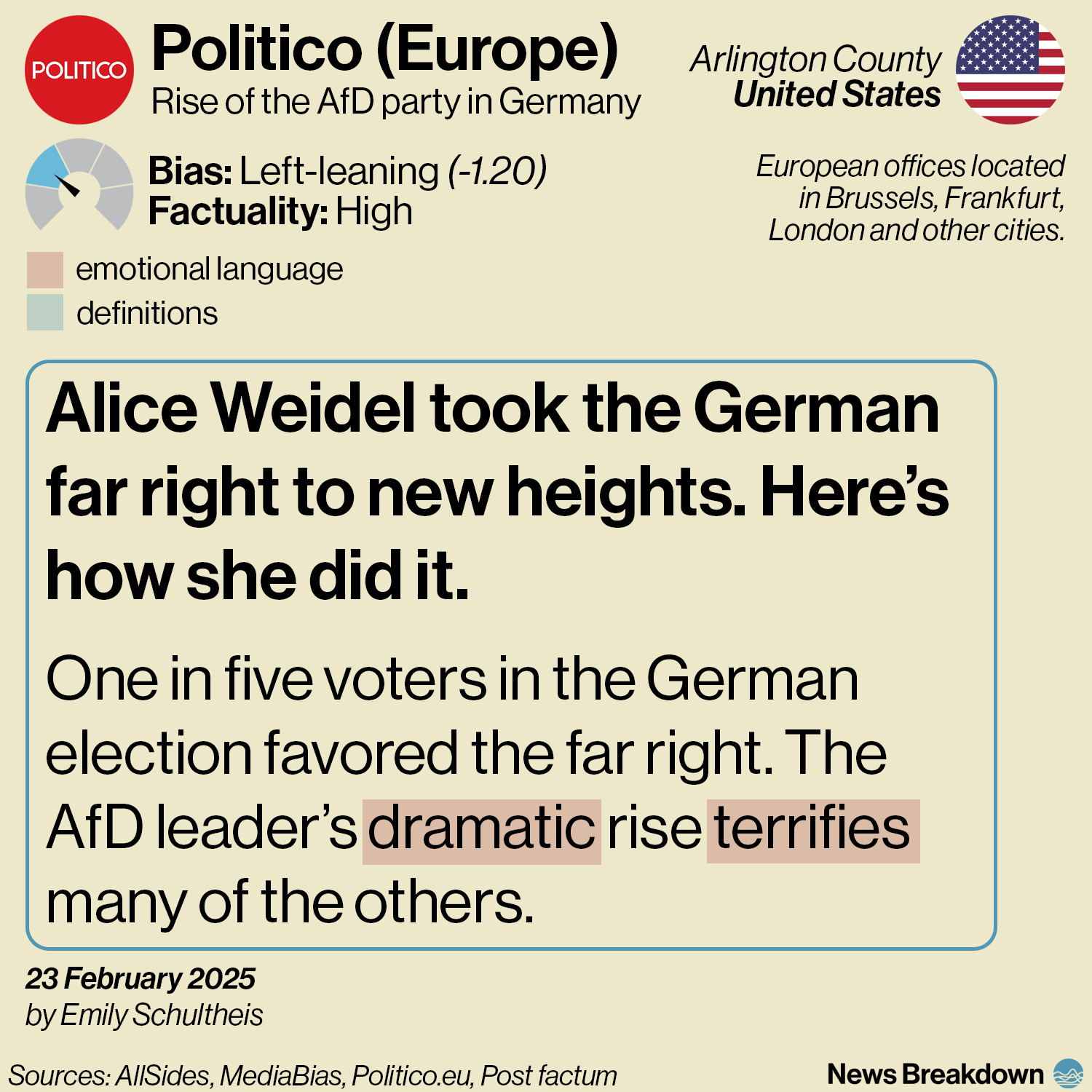
On 23 February 2025, AfD came second with 21% of the votes in a snap (unplanned) election, forced by the falling apart of a centre-left ruling coalition.
The centre-right party (CDU) has won the election and formed a ruling coalition with the centre-left party that came third.
CDU has a “firewall” policy: a formal promise to not form a government with “far-right” parties.
In 2021, a German intelligence service ruled that AfD is a “suspected far-right extremist force” leading to special observation measures.
AfD is seen as far-right by most of the mainstream media and politicians. This is because of AfD’s comparatively radical conservative policies, such as mass deportations or Germany leaving the European Union.
However, this label focuses on the extreme nature of the party’s proposals and leaves out the reasons behind them.
There are other descriptions of the AfD that explain its ideology:
Nationalist — AfD wants to put the interests of Germany first, in particular when it comes to helping other countries at the expense of Germany. Their policies focus on national strength, rather than international cooperation.
Eurosceptic — AfD started as a party that opposed European currency integration (the euro) and political integration (the EU). They see the EU as a flawed project that is not beneficial to Germany.
Populist — AfD can shift its principles to attract more voters. Its proposals and promises focus on issues that are relevant and emotional to large groups of the population at a particular moment.
Anti-establishment — one of AfD’s goals is to counter and disrupt the status quo (existing state of things). It sees the government and the ruling elites as corrupt, ineffective and having a left-wing bias.