Bloomberg vs WSJ, Role of India, and Damage ͏ ͏ ͏ ͏ ͏ ͏ ͏ ͏ ͏ ͏ ͏ ͏ ͏ ͏ ͏ ͏ ͏ ͏ ͏ ͏ ͏ ͏ ͏ ͏ ͏ ͏ ͏ ͏ ͏ ͏ ͏ ͏ ͏ ͏ ͏ ͏ ͏ ͏ ͏ ͏ ͏ ͏ ͏ ͏ ͏ ͏ ͏ ͏ ͏ ͏ ͏ ͏ ͏ ͏ ͏ ͏ ͏ ͏ ͏ ͏ ͏ ͏ ͏ ͏ ͏ ͏ ͏ ͏ ͏ ͏ ͏ ͏ ͏ ͏ ͏ ͏ ͏ ͏ ͏ ͏ ͏ ͏ ͏ ͏ ͏ ͏ ͏ ͏ ͏ ͏ ͏ ͏ ͏ ͏ ͏ ͏ ͏ ͏ ͏ ͏ ͏ ͏ ͏ ͏ ͏ ͏ ͏ ͏ ͏ ͏ ͏ ͏ ͏ ͏ ͏ ͏ ͏ ͏ ͏ ͏ ͏ ͏ ͏ ͏ ͏ ͏ ͏ ͏ ͏ ͏ ͏ ͏ ͏ ͏ ͏ ͏ ͏ ͏ ͏ ͏ ͏ ͏ ͏ ͏ ͏ ͏ ͏ ͏ ͏ ͏
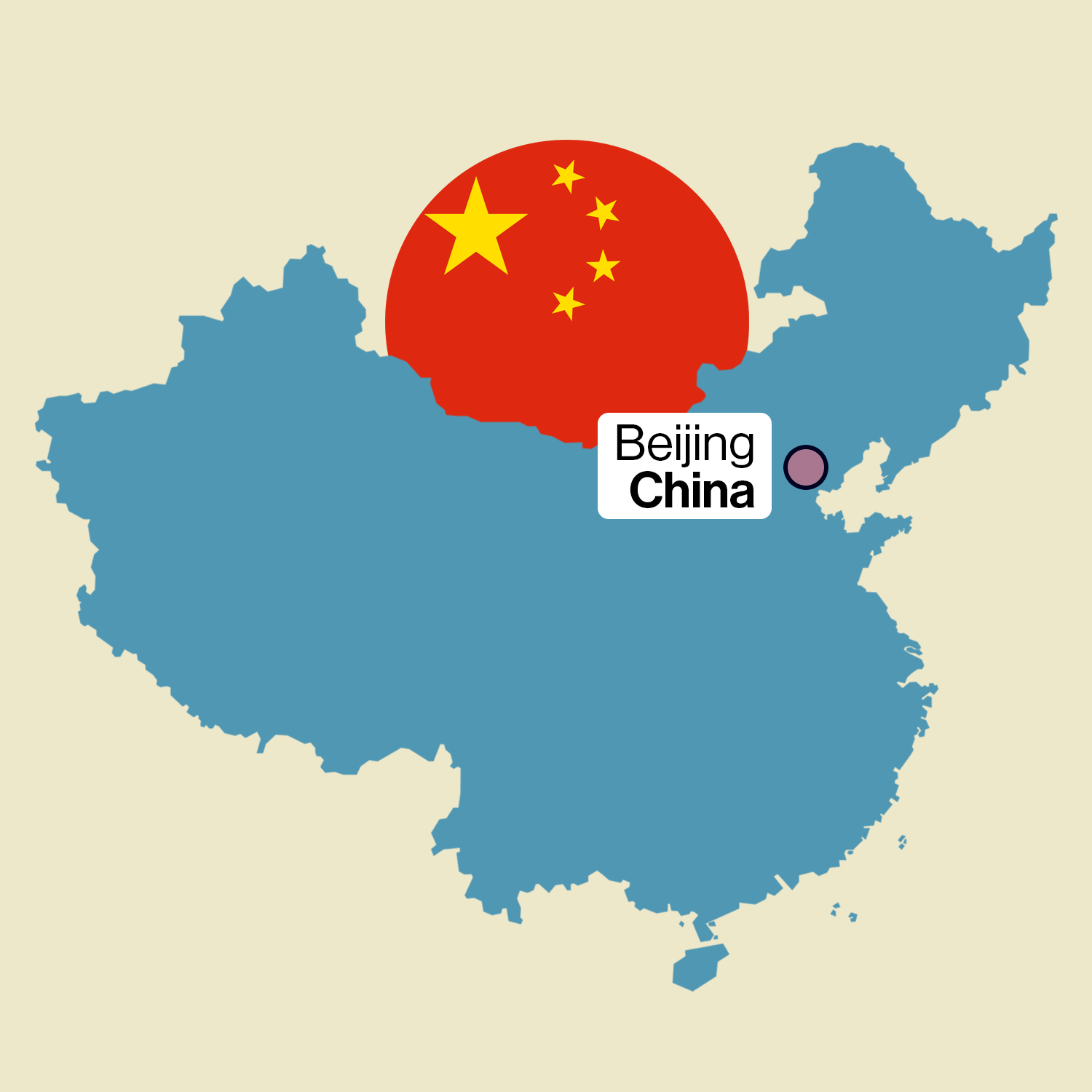
China: Critical Minerals Export Controls
|
|
|
|
|
On February 4, 2025, China announced new export restrictions on five ‘rare earth’ metals.
- These are mainly used in electronics, infrastructure and defence.
It came just 3 days after the US implemented a new 10% tariff on Chinese goods.
The EU and the US class most of these metals as critical materials.
The new rules were not an outright export ban. However, they meant China could more easily restrict supply to foreign countries when needed.
China also announced tariffs on some US goods and an investigation into Google’s corporate practices.
- China has a dominant role in mining, and especially refining, of various metals and minerals critical to defence and industrial development.
- The West has long believed China could restrict critical materials supply for political advantages.
China implemented other export restrictions before and since February 2025, which we return to in the final section.
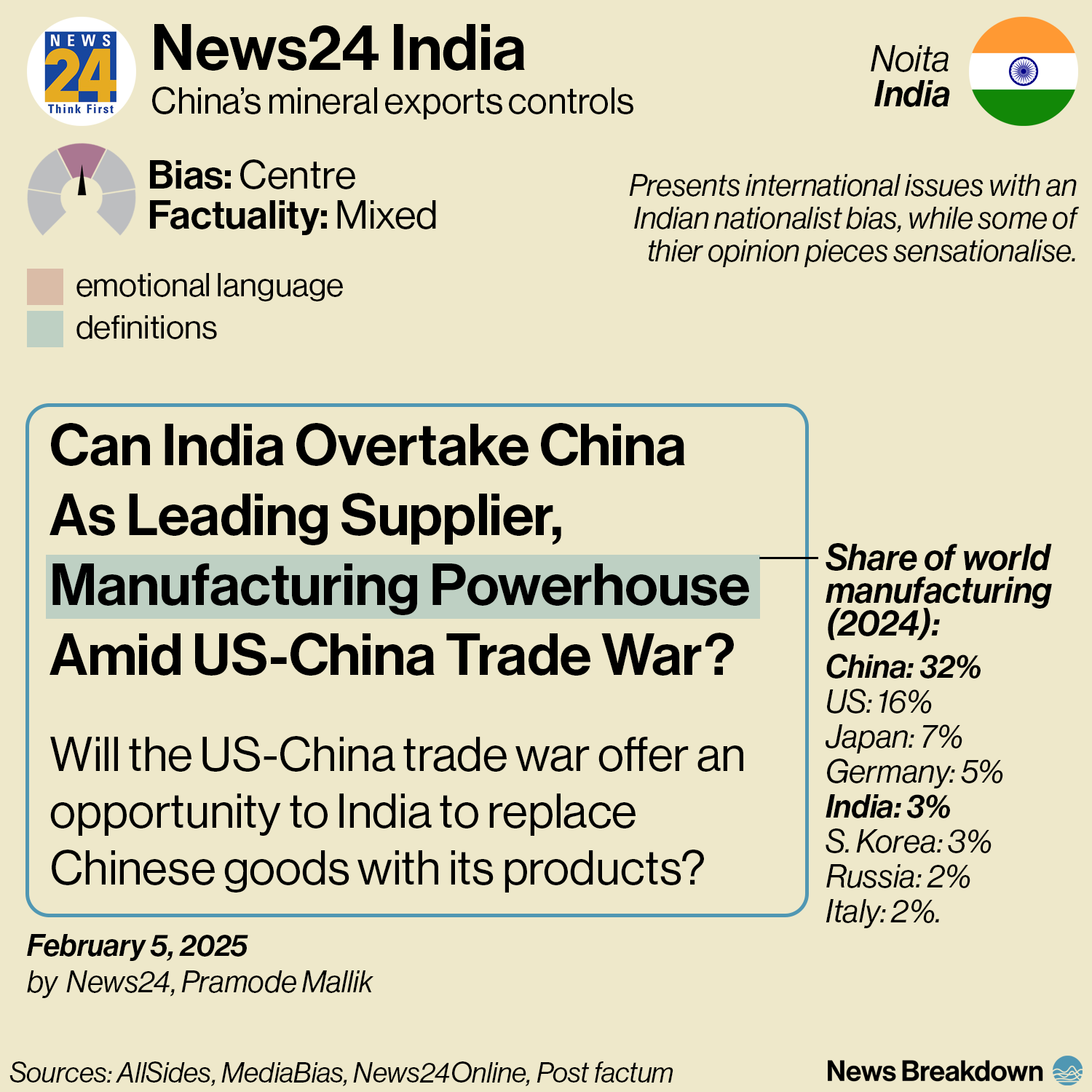
In this report, we analyse how the media reported on China’s critical minerals export restrictions in the context of the wider US-China trade war.
|
|
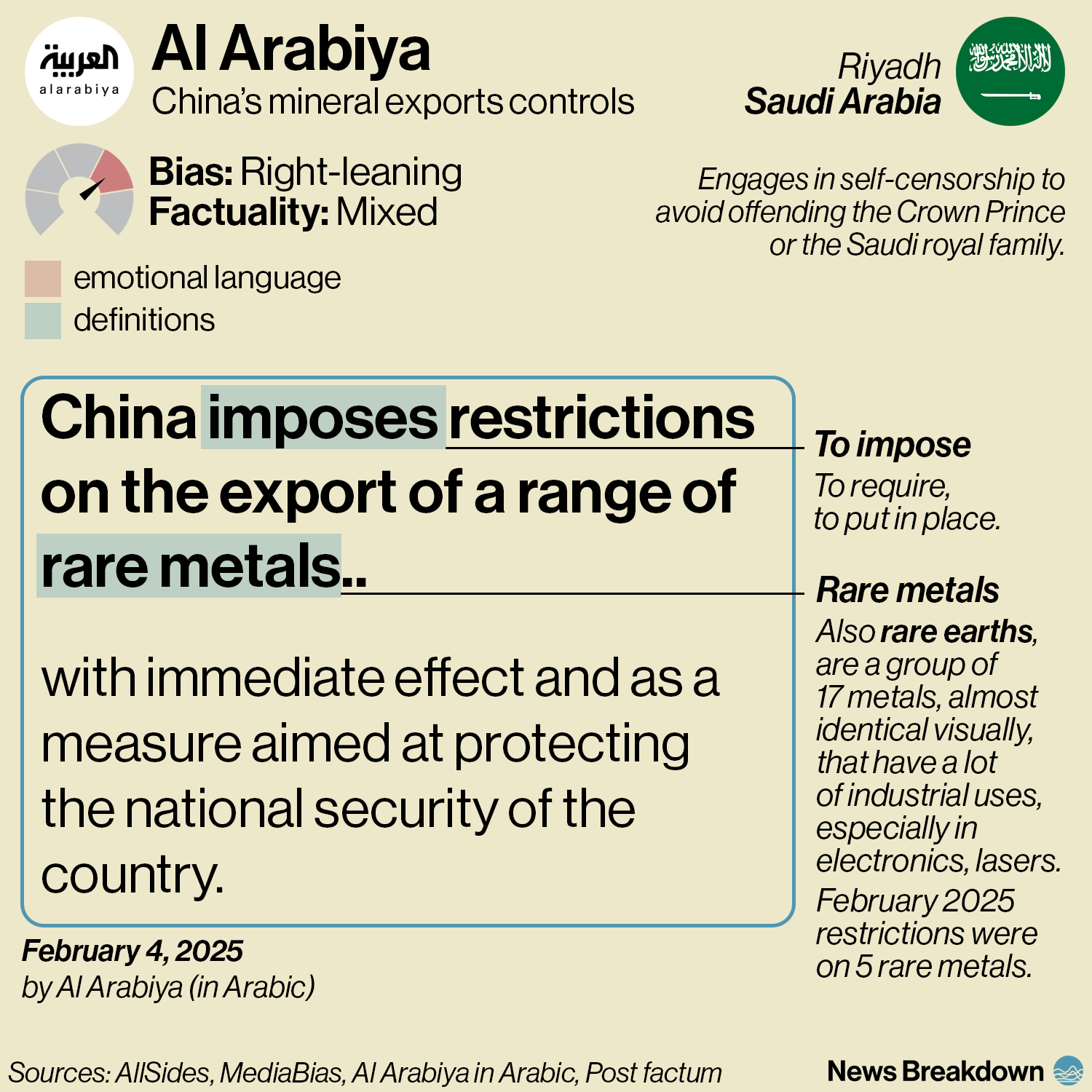
Al Arabiya: Saudi state-owned international news outlet.
Angle: China forced to respond.
The article subtly critiques US tariffs by reporting from the Chinese perspective.
- It quotes China’s justifications for the new export rules without critical commentary.
- It contextualises China’s export rules as responses to longer-term US attempts to slow China’s development.
This is surprising because Al Arabiya tends to be relatively pro-US.
However, Trump’s trade war could be damaging to Saudi interests.
- Saudi Arabia needs high oil prices to support its economy.
- Trade war reduces economic activity and international shipping.
- This lowers oil demand and prices.
Further, Saudi Arabia’s economy depends on China.
- Saudi state depends on crude oil for revenue (60% of its exports).
- China is the biggest single consumer of Saudi crude oil.
Yet the article does not attack the US explicitly.
- The US is Saudi Arabia’s fourth biggest export destination.
- Saudi Arabia relies on US for security.
This reflects Saudi Arabia’s difficult geopolitical position.
- Trump’s high tariffs are damaging its petroleum exports.
- However, both US and China are major Saudi partners.
- Politically, Saudi Arabia cannot pick one side over the other.
|
|
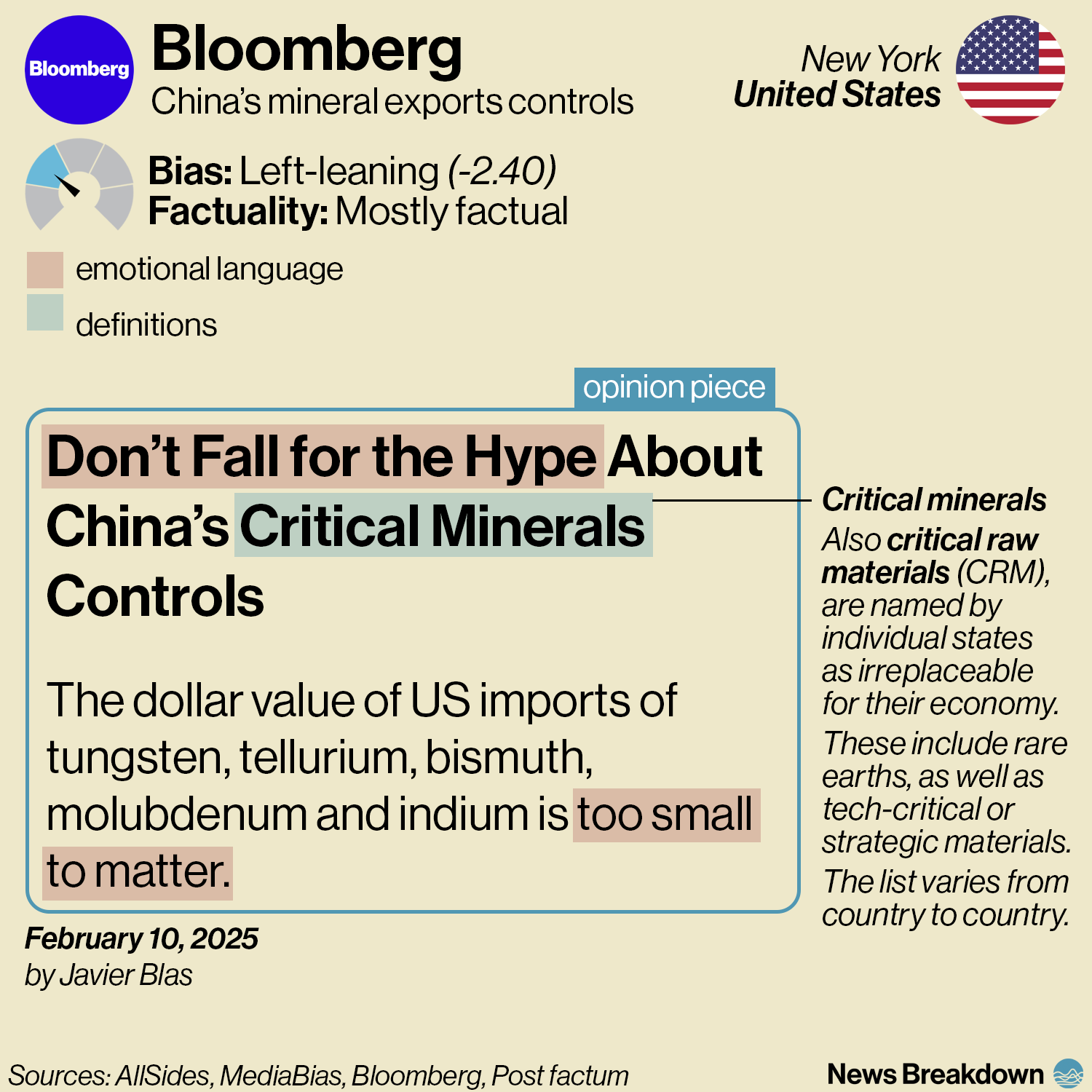
Bloomberg: Major US business news and data publisher.
Angle: China is not as powerful as it seems.
This is an opinion piece, a format that:
- Expresses an author’s personal views
- Often aligns with the publication’s stance
The author argues that China’s metal export rules do not threaten the US economy:
- The dollar value of the US market for the five affected metals is small.
- If China restricts exports and prices go up, US companies could absorb costs.
- Significantly higher prices would motivate Western companies to develop new mines and refineries.
- Supply would go up, and prices would decrease again.
The author is commodities journalist Javier Blas.
Blas focuses on the monetary value of commodities (price) rather than their strategic value (use in defence technology, for example).
This aligns with his readers’ concerns.
- Bloomberg reports from a Western business perspective.
- Business interests want to know if China’s new rules will raise costs and lower profits.
- They are not necessarily interested in defence or geopolitics.
Blas’ arguments also express the ideology of free market liberalism. He writes:
- If demand (price) is high enough, the market will deliver.
- Government attempts to control supply can therefore only have limited impact.
The author’s professional history also explains why he downplays the threat of China’s critical materials rules.
- Journalist Javier Blas built his career by reporting on contacts in the oil, gas, and industrial metals sectors.
- Blas has fewer connections to the critical materials industry, a smaller and younger industry associated with emerging applications (renewables, digital tech).
- He therefore has less professional interest in advocating for critical materials as needing urgent investment or government support.
|
|
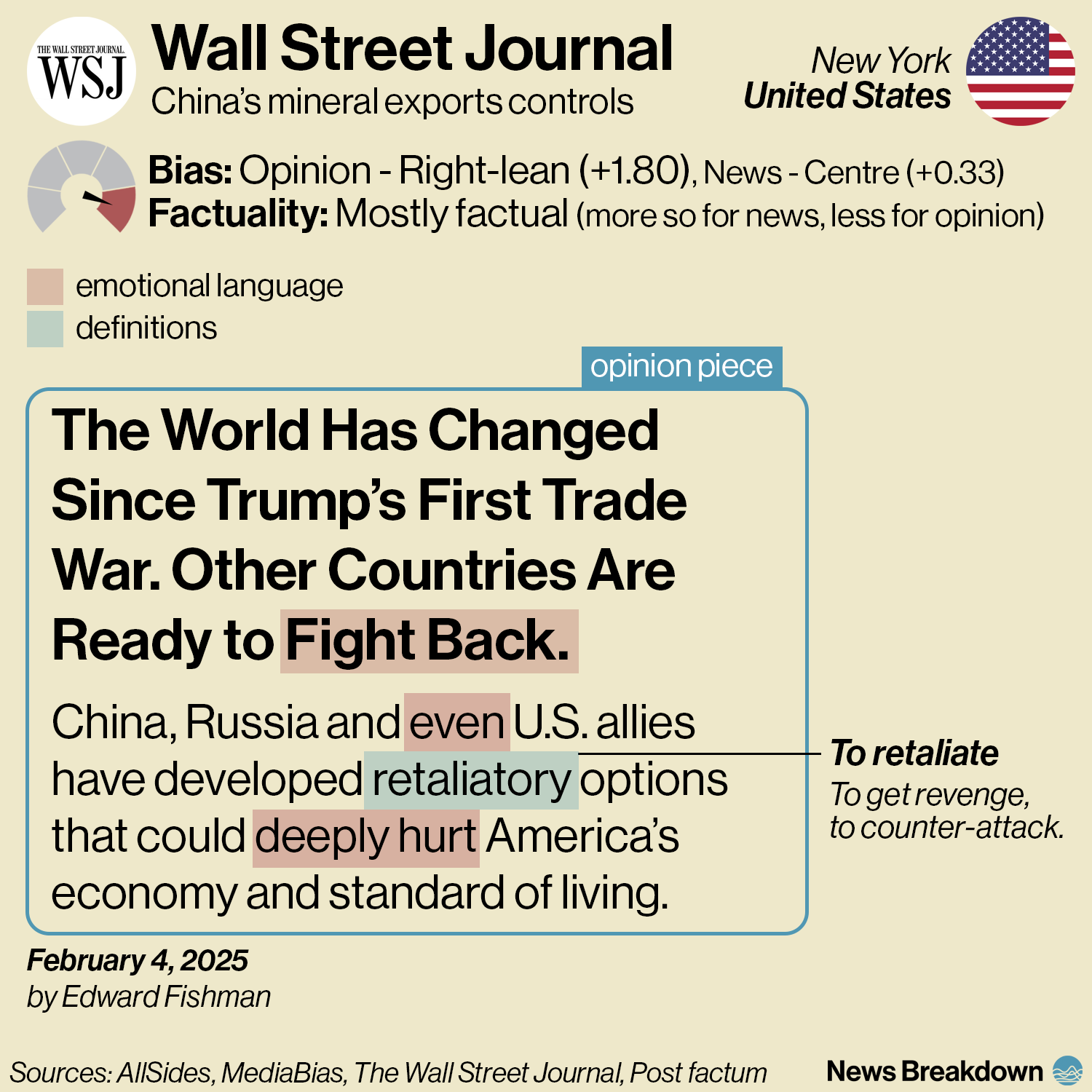
The Wall Street Journal: US centre-right business paper.
Angle: Chinese industrial dominance threatens the US
This opinion piece says China’s export rules are an example of economic warfare, which poses a real threat US power.
It warns that:
- US rivals (like China) can withhold strategic commodities to pressure the US.
- The US must therefore strengthen supply security in vital goods like critical materials.
This is contrary to the Bloomberg’s piece.
- Both the WSJ and Bloomberg are US business publications.
- However, the WSJ has a wider readership beyond business.
The WSJ is more likely to be read by policymakers.
This piece is addressed to US policymakers, who are more interested in the geopolitics of commodities than the business side of it.
For US policymakers, critical materials are important for their strategic value, not just monetary value.
Policymakers associate critical materials with geopolitical power because:
- Dominant producers can restrict supply to achieve political goals.
- This makes import-dependent countries vulnerable to foreign pressure.
|
|
|
|
|